
Review · MéRIDA TOURS
Walking Tour in the City of Mérida
One sentence hook: Merida starts making sense fast on foot. This walking tour strings together the city’s key plazas and landmark facades in a small English group, with a guide like Gabriel or Fernando who keeps things moving and answers your questions without turning it into a lecture. I like that the pacing is tight, so you get a clean overview of what to prioritize next.
Two things I really like: you walk the heart of Merida and see how Spanish, Renaissance, and even Mayan influence show up in real buildings, not just vague ideas. And you end with the Palacio de Gobierno murals by Fernando Castro Pacheco fresh in your mind, plus a broader sense of how the city tells its own story. One consideration: with up to 20 people and street construction in the center, you may have moments where it is harder to hear every detail.
Why This Walking Tour Works So Well in Central Merida
This is the kind of tour I recommend when you want orientation. You cover the classic sights you keep seeing in photos, but you also get the story behind the mix of cultures that shaped Merida, from architectural styles to place names and traditions.
At $22 per person for about 1 hour 45 minutes, the value is in the guided connections. You are not just collecting stops, you are learning what to look for while you walk, and that helps you move faster on your own later.
More of Playa on foot
- Merida Walking Food Tour. Authentic & Local Cuisine★ 5.0 · 451 reviews
- Merida Street Food Walking Tour★ 5.0 · 417 reviews
- Walking Tour Across the Historic Center in Merida★ 5.0 · 177 reviews
- Mike&Duck Walking Tour Merida★ 5.0 · 80 reviews
Key Highlights Worth Your Time
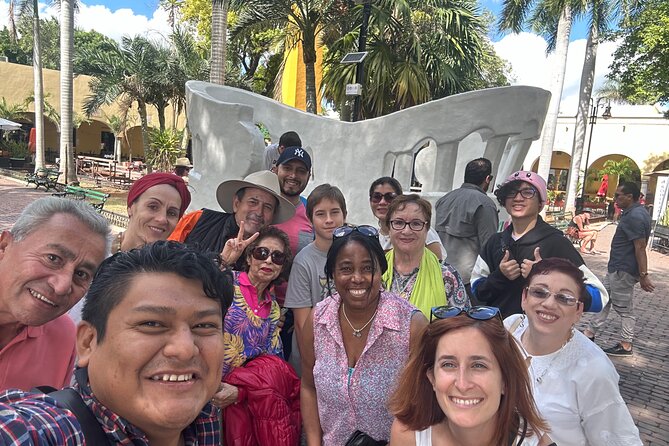
- A small group cap (up to 20) means you are not stuck in a massive crowd for the full walk
- English-language guide with a strong command and lots of humor in real feedback
- Frequent short stops (around 10 minutes each) keep the tour from dragging
- Fernando Castro Pacheco murals at Palacio de Gobierno are a standout visual payoff
- Architecture mix in one route, from Renaissance and Plateresque to colonial and neo-Mayan elements
Walking Merida’s Center Without Wasting Your First Day
The route is built for first-timers. You start near Catedral de San Ildefonso in the Centro area and work your way through the main civic and cultural zone. Most stops are short, so the goal is to help you build a mental map quickly, then point you toward what is worth deeper exploration later.
You will likely appreciate the structure if you like clear timelines and quick explanations. Based on feedback, the guides tend to stay focused, answer questions patiently, and share practical suggestions like where to eat or what to see next.
One practical note: Merida can be warm and humid, and the center can be noisy. If you get overheated easily, plan for water and sun protection, and choose a time of day when you feel comfortable walking.
Stop by Stop: What You Should Notice at Each Place
Parque de Santa Lucia: Trova Serenades and a Classic Starting Point
You kick off at Parque de Santa Lucia, a park known for celebrations of Yucatecan trova music and for its nearby food and chocolate spots. It also holds its place in Merida’s park history, being described as the third oldest park in the city.
Even if you do not stay long for music, this start matters. Parks like this are where you feel the rhythm of the city, and you get an easy first landmark before the tour moves into the heavier architecture and plazas.
Other ways to see the town itself
Universidad Autonoma de Yucatan: Where Architecture Blends Styles
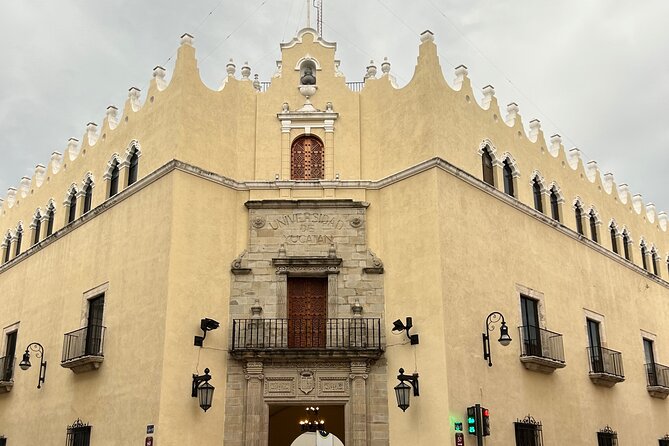
Next you reach the Universidad Autónoma de Yucatán (UADY). The central buildings are a lesson in layered design, described as featuring colonial, Arabic, and neo-Mayan architectural elements.
This is the kind of stop that pays off later. Once you know to look for style mixing, you start seeing it around you in Merida. You also come away with a sense of the university’s importance as a leading house of study in Yucatán.
A quick tip: take a moment to look up at details rather than only at the entrance. The interesting parts are often in the facade and how the building’s shapes echo different influences.
Teatro Peon Contreras: European-Style Grandeur in Merida
Then you get to Teatro Peón Contreras, described as a jewel of European architecture with an important opera-style hall. In a short visit, your job is to frame what kind of cultural life this city supports.
Even if you do not go inside for a performance, the exterior and the scale help you understand why Merida became a stage for music and theater. It is also a good contrast stop after the university, so the route keeps your eyes fresh.
Iglesia El Jesus, Tercera Orden: Limestone and the Mayan Pyramid Past
At Iglesia El Jesús, Tercera Orden, you will see an imposing limestone building. What makes it more than just another church is its past connection, described as tied to a Mayan pyramid history.
This is one of the stops where the tour’s explanations can change how you see the city. You will likely walk away thinking about how older foundations and newer religious structures can share a location and a story, even when the buildings look completely different.
If you are sensitive to noise or crowds, be ready for people stopping for photos. Churches and central landmarks draw constant foot traffic.
Parque Hidalgo: Stylish Plaza Vibes and City Energy
You then reach Parque Hidalgo, described as the most stylish park, with vegetation typical of Yucatán fauna and with theaters and cinemas all around. This is the “people-watching and orientation” stop in the middle of the route.
What I like about this moment is that it pulls you away from pure architecture and into how the city uses public space. By now, you have seen key facades and institutions, and the park helps you connect them to everyday life.
Cathedral de Merida: Renaissance Beauty and a Big First
At the Catedral de Mérida, you are looking at a Renaissance jewel. It is described as the first cathedral on the American continent in its entirety, which is a strong claim and worth paying attention to while you are standing in front of it.
Take a slow second here. Look at proportions and the way the facade reads from different angles. In a tight walking tour, this is the moment you give yourself for a true visual anchor.
El Palacio de Gobierno: Fernando Castro Pacheco Murals Are the Payoff
This is where many people’s attention locks in. El Palacio de Gobierno is described as the ideal place to enjoy Mayan and Yucatan history through the murals of Fernando Castro Pacheco.
Even with a short stop, murals are a high-impact format. They are part art, part history lesson, and they help you understand how Merida wants to represent itself. If you only remember one location from the walk, make it this one.
Practical move: stand with your back not too close to a wall so you can take in the full surface area. Murals often look better a few steps back.
Palacio Municipal: Coats of Arms and the Story Behind the Name Mérida
Next is Palacio Municipal, where you observe official coats of arms and hear about why the Spanish decided to name this city Mérida.
This stop matters because it ties politics and identity to place. A cathedral tells you about faith and power. A city hall tells you about governance and what a city chooses to emphasize about itself.
Also, it is noted that every Monday, the traditional dance called Jarana takes place here. You might not catch it during your walk, but knowing it is part of the local rhythm helps you plan your broader schedule.
Museo Casa Montejo: Plateresque Architecture in One Strong Moment
You finish at Museo Casa Montejo, described as the purest expression of Spanish Plateresque architecture and as the only building on the American continent with this style. That is a bold promise, and the reason you end here is simple: it gives you a “final boss” of architectural detail.
This is a great stop to slow down and look at ornamentation. Plateresque style is about decorative richness, and the facade is where you will feel the difference.
Timing note: the final stop is a bit longer (about 15 minutes), so use that extra time for photos and a quick look that is more than a glance.
How the Guide Changes the Value (And Why Gabriel and Fernando Get Mentioned)
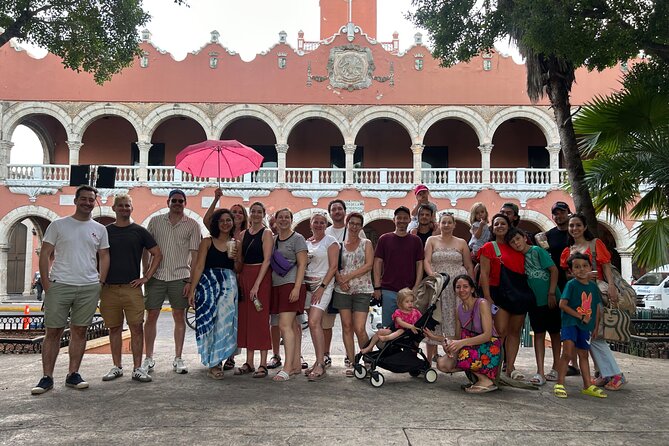
The best part of this tour, in real feedback, is the guide. Guides like Gabriel and Fernando come up again and again for a reason: they manage the line between history and entertainment.
In feedback, I saw a pattern of guides who:
- Keep explanations relevant, not overwhelming
- Use humor to lighten the walk
- Stay patient with questions
- Offer useful next-step suggestions for meals and sightseeing
If you like to ask questions, this tour is a good fit. The pace is short enough that you can still stay engaged, and the guide has time to respond without rushing you into silence.
One extra value: there is at least one mention of a guide sharing timely local tips for catching a Mayan ballgame enactment during the visit. That is not guaranteed, but it is a good reminder to ask your guide what is happening that day near your walking route.
Logistics and Pacing: What to Expect From the Walk
This experience runs for about 1 hour 45 minutes and includes a maximum group size of 20 travelers. That matters in the real world because central Merida streets can be tight and loud, and construction can affect how easily you stay together.
You are visiting mostly outdoor exteriors and quick in-front-of-the-building moments. The itinerary indicates admission is free for each stop, which helps keep the tour’s cost predictable. Still, a short time at each place means you should not expect deep museum-style immersion at every stop.
If you are sensitive to noise, it may be worth choosing a time when streets are calmer. One review also pointed out that arriving early can mean you wait and it can be easy to miss the group. When you arrive, scan the meeting point area and double-check your guide instructions right before the start time.
Price and Value: Is $22 a Good Deal?
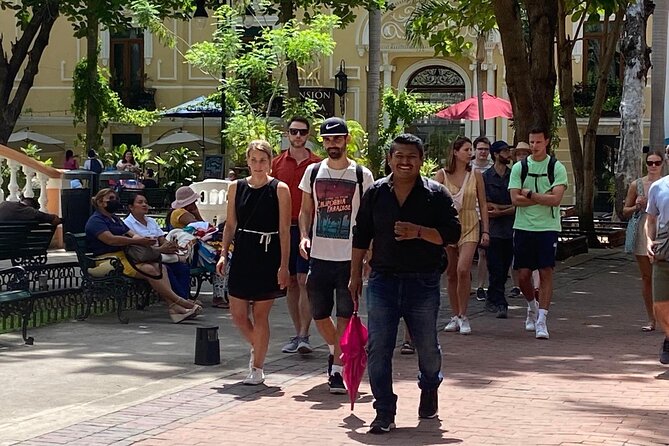
For $22 per person, the value comes from two things: coverage and interpretation. You see the core landmarks that define Merida’s Centro and you get a guide to connect the dots between the architecture styles and local identity.
Is it worth it if you only want to take photos? Probably not. It is worth it if you want your first hours in Merida to feel structured and meaningful, so you can plan your later self-guided time with more confidence.
Also, in practical terms, you do not need to budget for paid entries on the stops you visit, since the itinerary lists free admission for each location.
Who Should Book This Walking Tour?
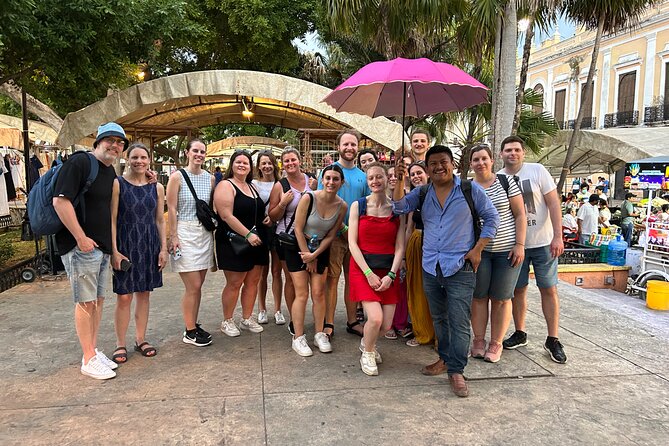
I would book this if you:
- Want an easy first-day orientation in Centro Mérida
- Prefer walking with short, clear stops over a long museum day
- Like architecture and cultural stories explained in plain language
- Travel with a partner or solo and want a guide to handle the big picture
You might choose another option if:
- You need a quieter experience with very small group size
- You dislike construction delays and the challenge of hearing a guide in a busy central area
- You expect long interior time at each major building (this route is built for quick highlights)
Should You Book This Tour in Merida?
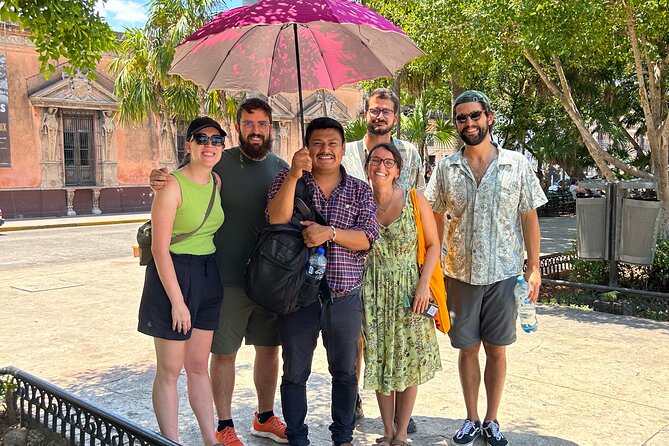
Yes, I think you should book it if you want your Merida start to feel organized and guided, without spending your whole day in a single museum. The route hits the landmarks you will keep circling back to, and the Palacio de Gobierno murals plus architecture-focused stops make it more than a checklist.
Just go in with the right expectations: this is a fast-moving walk meant to help you get your bearings fast. If you want deeper time inside any one place, treat the tour as your launch pad, then follow your guide’s recommendations for what to do next.
FAQ
Where is the tour start point?
The tour starts at Catedral de San Ildefonso, C. 60, Centro, 97000 Mérida, Yuc., Mexico.
Where does the tour end?
The tour is listed as ending at Museo Casa Montejo, C. 63 506, Centro, 97000 Mérida, Yuc., Mexico. In at least one case noted in feedback, the group ended up at St. Lucia Park.
How long is the walking tour?
It runs for about 1 hour 45 minutes.
What is the price per person?
The price is $22.00 per person.
Is the tour in English?
Yes, the tour is offered in English.
Do I need paper tickets?
No. The tour uses a mobile ticket.
Is admission free at the stops?
The tour description lists free admission for the stops included.
How many people are in a group?
The tour has a maximum of 20 travelers.
What if the weather is poor?
This experience requires good weather. If it is canceled due to poor weather, you are offered a different date or a full refund.
More on Foot


More Tours in Merida
More Tour Reviews in Merida
Just reviewed around Merida





Mérida Tours, compared.
 ★ 5.0Merida Walking Food Tour. Authentic & Local CuisineFrom $70451 reviews
 ★ 5.0Merida Street Food Walking TourFrom $69417 reviews
 ★ 5.0Taste of the Yucatan: Merida Cooking Class and Market VisitFrom $95291 reviews
 ★ 4.93-Hour Walking Food TourFrom $69287 reviews
 ★ 5.0Chichen Itza Tour, Izamal, Cenote Ik Kil and FoodFrom $79246 reviews
 ★ 3.7Panoramic Sightseeing Tour Bus Ticket with 2 RoutesFrom $8246 reviews
 ★ 5.0Walking Tour Across the Historic Center in MeridaFrom $22177 reviews
 ★ 4.9Uxmal and amazing cenotes guided tour with lunchFrom $93175 reviews
Also on these lists