
Review · RIVIERA MAYA CENOTE TOURS
Tour Cenote Santa Cruz
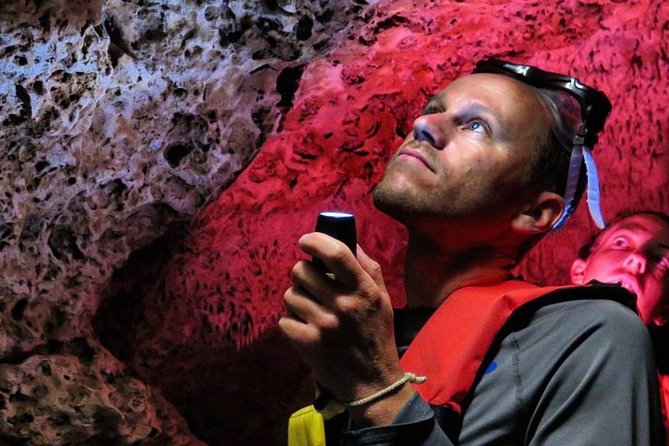
There is something about cenotes that feels prehistoric. I love how this visit mixes dry and wet cave passages with 60-million-year formations, so it feels less like a splash and more like an exploration. You also get the kind of guided storytelling that helps you notice the details, from rock shapes to local plant and animal life.
Two hours of walking, pausing, and moving through underground chambers is the core, with round-trip transfers from Akumal included. In my notes, the biggest plus is the guide who keeps the experience ecological and educational, not just scenic, plus small group sizes that make it feel personal.
One practical consideration: mosquitos can be an issue in and around the jungle approach and near water, so I’d plan for bugs even if the experience is calm and well organized.
Key highlights at a glance
- Dry-and-wet cenote routes: switch from dark chambers you walk through to the clear-water section.
- Small group pacing: your guide controls timing so you get more breathing room inside the cave.
- Flashlights provided: you are not stuck trying to see with phone lights.
- Snorkeling gear plus life jackets (borrowed): helpful for a comfortable, safer water experience.
- Focused interpretation: you learn about cenotes, formations, flora and fauna, not just where to stand for photos.
- Akumal transfers included: less hassle, more time spent underground.
Other cenotes within half an hour of the 307
- From Playa del Carmen ATV Adventure with Ziplines, Cenote★ 5.0 · 2,041 reviews
- Half-Day Sea Turtle and Cenote Snorkeling Tour from Cancun & Riviera Maya★ 5.0 · 2,039 reviews
- Playa del Carmen Buggy Tour with Cenote Swim and Mayan Village Visit★ 5.0 · 1,747 reviews
- Jungle Buggy Tour from Playa del Carmen Including Cenote Swim★ 5.0 · 1,253 reviews
Why Cenote Santa Cruz feels like more than a swim
Cenote Santa Cruz is the kind of place that rewards your attention. You do not just walk up, jump in, and rush out. The tour is built around understanding what you are seeing, including how cenotes formed and how the living world around them adapts to low-light conditions.
I like that the approach stays grounded in nature. You get explanations about cenotes, flora, fauna, and formations while you move through a system that includes both a dry route and a wet route. That mix changes the vibe, because it gives you different textures of the same environment: shadows, slick steps, and then crystal-clear water that makes the formations look even sharper.
The setting also helps. You are going underground through underground chambers and pathways, so the whole time feels like being inside a real cave network rather than a single viewing spot. And the formations you see are described as more than 60 million years old, which puts everything into perspective fast.
Your 2.5 hours schedule, and what happens at each moment
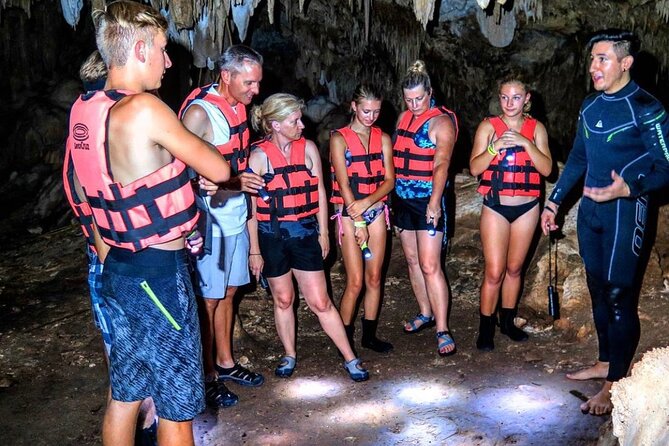
This is an approximately 2 hours 30 minutes experience, and it is structured around one main stop: the cenote itself. The time you spend underground is where the tour earns its keep.
Stop 1: Cenote Santa Cruz
The tour starts with an orientation and then moves you toward the entry and into the cave system. Expect to go through parts that feel like a classic cave walk, plus a wet section where you are in the water.
The guide keeps things moving but not rushed. The goal is to protect and “culturize” visitors, which you feel in how the guide talks: you are encouraged to pay attention to what makes cenotes special, including how the cave forms and what types of life are present nearby.
You will also have key equipment available. You get flashlights, plus snorkeling gear and life jackets to borrow. That means you can focus on the experience without bringing your own setup.
One detail that stands out from the overall flow: the guide seems to manage group movement thoughtfully. In practice, that can mean waiting a bit so your group gets more peaceful time in the chambers and pathways instead of being squeezed in while everyone lines up for the same photo spot.
What you should watch for here is simple: even if you are excited to swim, the value of this tour is also the walking and the explanation. If you spend the full time only rushing to the water, you will miss a lot of what you came for.
Getting there from Akumal, and why transfers matter
You meet at the Akumal Medical Center on Av. Gonzalo Guerrero, Mza 13 01 Lt 01, between Calle Punta Allen and Punta Piedra (Akumal, Q.R., Mexico). The tour starts there and ends right back at the same meeting point.
What makes that practical is that this is not a “figure it out yourself” cenote trip. Round-trip transfers from Akumal are included, and that reduces two common stress points: finding the right access route and coordinating rides back after you are wet, tired, and hungry.
In the real world, cenote tours can turn into a logistics puzzle. This one is designed to remove that. You also get a clear window of operating times, with sessions running Monday through Saturday during the listed seasonal dates, including:
- 9:00 AM to 12:30 PM
- 1:00 PM to 3:30 PM
If you are staying around Akumal, that scheduling makes it easier to plan a full day without losing half your time to transportation and delays.

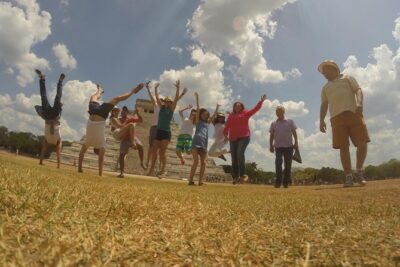
Gear and comfort: flashlights, snorkeling kit, and life jackets
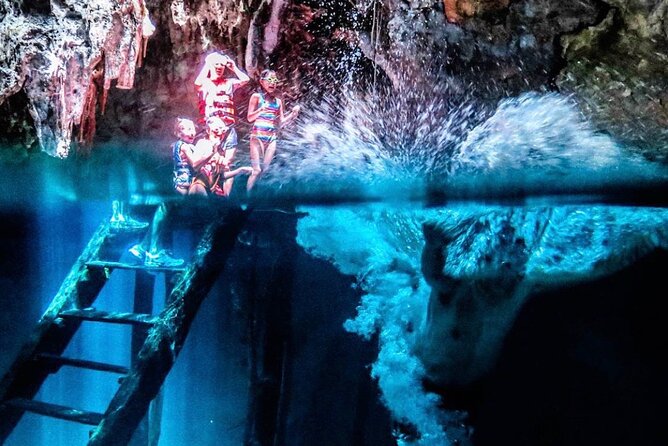
Cenotes are dark and the floor can be slippery, so equipment matters more than you might think. Here, you are given:
- Flashlights
- Snorkeling gear (available to borrow)
- Life jackets (available to borrow)
The flashlight is the quiet hero. Without it, underground caves can turn into a stressful guessing game. With it, you can actually see where you are placing your feet and how the formations change as light hits the rock.
For the water section, having snorkeling gear and a life jacket gives you options. If you are a stronger swimmer, you can focus on snorkeling comfortably. If you are less confident, the life jacket helps you stay relaxed so you can enjoy the underwater clarity instead of feeling tense.
A quick comfort note: wear swimwear you are okay with getting fully soaked, and plan for getting sandy or damp during the walk-in. Even with borrowed gear, your body will feel the cave conditions, so keep that in mind.
The dry-and-wet experience, and how to enjoy both parts
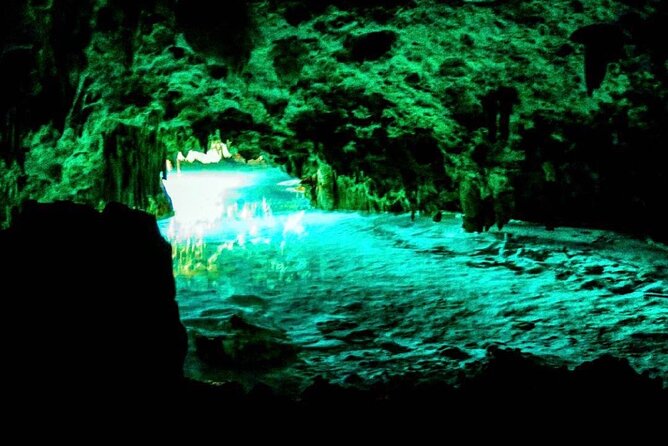
This tour’s big differentiator is the way it handles the cenote as a sequence of environments. You are not only in the water. You also do a dry section, then transition into the wet section.
Why that matters: a dry cenote route lets you experience the cave scale. You can look up, notice the shapes of chambers, and get a sense of how the pathways connect. When you then go into the wet section, the contrast makes the crystal-clear water feel even more striking, and it becomes easier to appreciate the formations from multiple angles.
To make the most of it, I suggest you think like a visitor who is collecting details, not just time. Slow down during the dry walking. The guide’s explanations about formations and the local ecology are strongest when you are standing still long enough to actually see what they mean.
Then, in the wet part, focus on staying buoyant and relaxed. The life jacket helps, so take advantage of that. Move at a comfortable pace so you can look around underwater and not just get from point A to point B.
Guide style: small groups and calm, personal attention
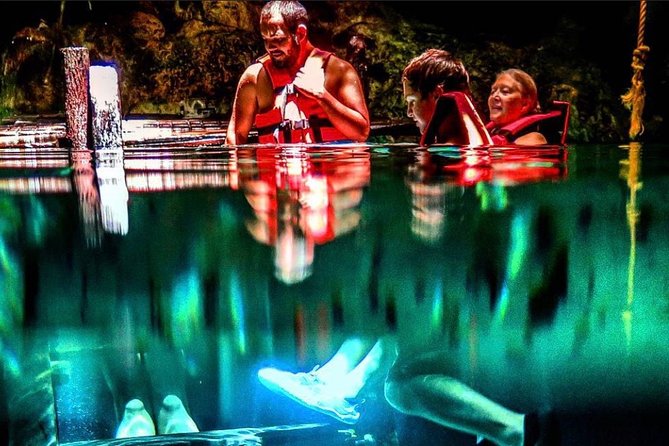
This tour is offered in small groups and is private for your group only. That is a huge difference compared to the big-bus style cenote trips where you follow the crowd and try not to get separated.
The best part is the way the guide makes the experience personal. A guide can either treat you like a line on a schedule, or like actual humans who want to understand where they are. Here, you get the second kind of guide.
One guide name you may see is Viktor. Based on the tone of the experience, his approach is patient and detailed, and he takes time so you do not feel herded. There is also an emphasis on letting other small groups pass so you can enjoy quieter time in the chambers and pathways.
For you, that usually means:
- more time to ask questions
- less rushing
- a better chance of enjoying the cave atmosphere without constant interruptions
This is where the “2.5 hours” starts to make sense. You are not just waiting in line. You are actually using the time to see, listen, and move with purpose.
Wildlife, formations, and what you should notice underground
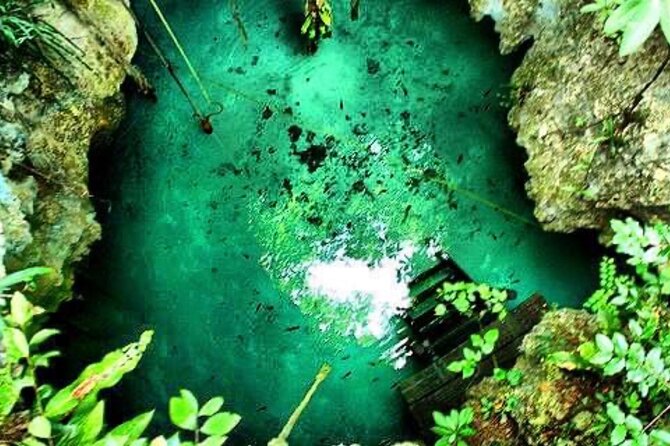
The tour description highlights a focus on cenotes, including flora, fauna, and formations. You can use that as your own checklist while you walk.
In a cave environment, it helps to notice three things:
- Rock shapes and textures: formations can change along the chamber walls and near water.
- Light and shadow: the same rock looks different depending on how the flashlight beam hits it.
- Signs of life in the surrounding area: even if animals are not always visible, the guide’s explanation helps you understand why this ecosystem can exist.
Also, the tour frames cenotes as more than a tourist feature. The mission is to protect and “culturize” visitors. In plain terms, that means the guide keeps you in a mindset of respect: follow instructions, move carefully, and treat the place like a living natural system.
If you go in expecting only photos, you might leave a little bored. If you go in curious, you will come away with a story you can retell, not just a memory of clear water.
Mosquitos and other practical tips before you go
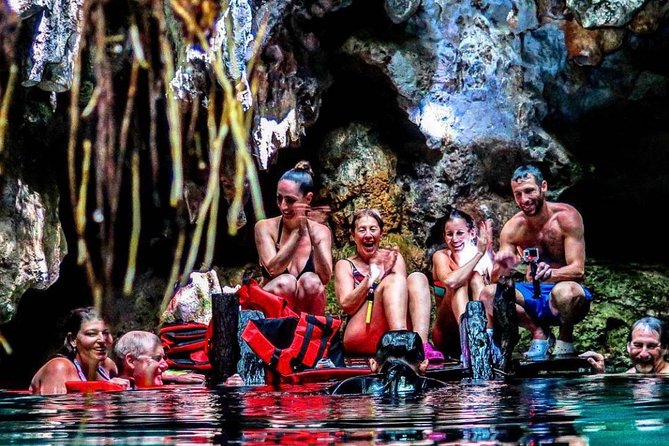
Let’s talk about the real-world challenge: mosquitos. In the wild, caves can still mean bug exposure during the jungle approach or at the edges of water.
I strongly recommend you pack some kind of mosquito defense. If you are sensitive to sprays, you might want a more skin-friendly approach, but whatever you choose, do not rely on luck. Bring protection, even if you are not planning on being outdoors for long.
Other practical ideas:
- Bring a small towel or wear a quick-dry cover-up for before and after the wet section.
- Keep essentials in a secure spot so you are not scrambling with wet hands.
- Wear footwear you can walk in comfortably during steps down and around the entry area. You should have a moderate physical fitness level for a safe, comfortable experience.
Value for your time: what you get with this guided cenote visit
This tour is priced in the way most guided cenote experiences are: it includes the essentials you would otherwise have to figure out on your own.
You get:
- admission ticket included for the cenote time
- round-trip transfers from Akumal
- flashlights
- snorkeling gear and life jackets to borrow
- a guide focused on explanations, not just supervision
- small group setup and private participation
Even without knowing a specific price point, the value is clear in the structure. You spend your time in the water and the chambers, with the right equipment and a guide to help you see more than the obvious.
If you are comparing options, ask yourself a simple question: do you want a guided, educational experience with gear and transfers handled, or do you want to manage the trip on your own? This tour leans hard toward the first option.
Who this cenote tour fits best
This is a good match if you:
- want an active, underground experience that includes both walking and water time
- like guided context about nature and cave formations
- prefer small groups and quieter attention
- are staying near Akumal and want transfers included
It is also worth considering if you have kids. One group experience included children as young as 5, and everyone enjoyed the visit, which suggests the tour can work well for families who follow instructions and are comfortable with the cave setting.
If you are very mobility-limited or worried about uneven, damp surfaces, you should think carefully. The tour notes a moderate physical fitness level requirement for a reason.
Should you book Cenote Santa Cruz?
Book it if you want a guided cenote where you get both the dry-and-wet cave feel and the real explanations that help you understand what you are seeing. The small-group, private style plus included transfers and equipment makes it a lower-stress way to experience a cave system safely.
Skip it or rethink if mosquitos are a major issue for you and you are not willing to protect yourself. Also, if you do not enjoy guided walking in damp environments, you may find the mixed dry and wet approach less appealing than a pure swim.
If you can handle those two realities, this tour is one of the more thoughtful ways to experience a cenote in the Playa del Carmen area, especially when you start from Akumal and want a smooth, organized day underground.
FAQ
Where does the Cenote Santa Cruz tour start?
The tour starts at Akumal Medical Center on Av. Gonzalo Guerrero, Mza 13 01 Lt 01, between Calle Punta Allen and Punta Piedra, in Akumal, Q.R., Mexico.
How long is the tour?
The tour is approximately 2 hours 30 minutes, and the cenote time includes a ticket for about 2 hours.
Do I need to bring my own flashlight, snorkeling gear, or life jacket?
No. Flashlights are provided, and snorkeling gear and life jackets are available to borrow.
Is the tour offered in English?
Yes, it is offered in English.
Are round-trip transfers included?
Yes. Round-trip transfers from Akumal are included.
What kind of physical activity should I expect?
You should have a moderate physical fitness level, since the experience includes walking and moving through wet and dry cave areas.
Is this a private tour?
Yes. It is private, meaning only your group participates.
What are the operating hours?
During the listed seasons (07/25/2025 to 11/28/2025 and 07/25/2026 to 11/28/2026), it runs Monday through Saturday from 9:00 AM to 12:30 PM and from 1:00 PM to 3:30 PM.
What happens if weather is poor?
This experience requires good weather. If it is canceled due to poor weather, you will be offered a different date or a full refund.
What is the cancellation policy?
This experience is non-refundable and cannot be changed for any reason. If the experience is canceled due to poor weather, you will be offered a different date or a full refund. If it is canceled because a minimum number of travelers is not met, you will be offered a different date or experience or a full refund.
More Tours in Playa del Carmen



More Tour Reviews in Playa del Carmen

Three More Cenotes Worth the Drive

Just reviewed around Playa del Carmen



Riviera Maya Cenote Tours, compared.
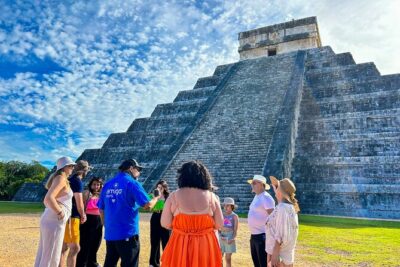 ★ 4.5Chichen Itza, Cenote & Valladolid Tour with Tequila and LunchFrom $3415,789 reviews
 ★ 4.6Chichen Itza, Cenote & Valladolid Tour with LunchFrom $496,722 reviews
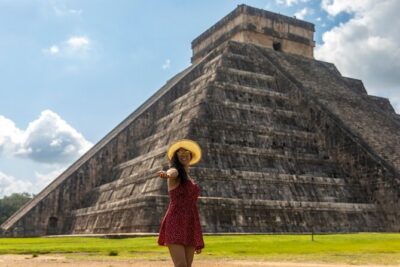 ★ 5.0Early morning Chichen Itza Tour: Cenote and Tequila TastingFrom $266,657 reviews
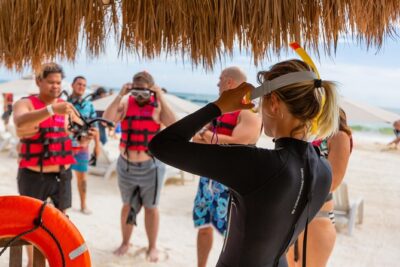 ★ 5.0Viator Exclusive: Tulum Ruins, Reef Snorkeling, Cenote and CavesFrom $1294,242 reviews
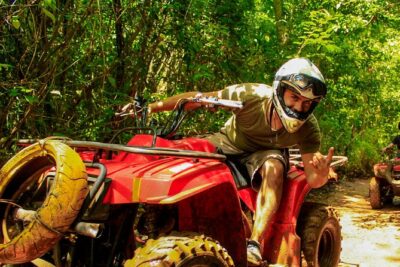 ★ 4.5ATV Adventure, Interactive Bridges, Ziplines, Cenote and LunchFrom $493,903 reviews
 ★ 4.5Cancun Best ATV Tour, Ziplines and Cenote Swim with LunchFrom $483,406 reviews
 ★ 4.5Tulum Ruins and Cenote Guided Tour, from CancunFrom $492,592 reviews
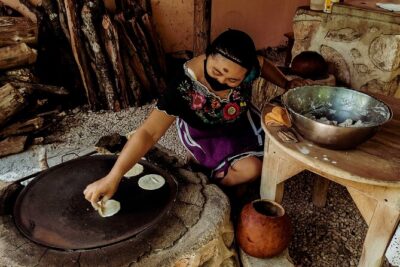 ★ 5.0Chichen Itza Gastronomic, Valladolid and Cenote ExtremoFrom $292,558 reviews