
Review · SCUBA DIVING
PADI Discover Scuba Diving
Your first breaths underwater can feel oddly calm. This Costa Maya experience is built for first-timers, with guided PADI Discover Scuba skills plus a short reef outing. I like that you start with practice in water shallow enough to stand, so nerves have somewhere safe to go.
What I especially like is the attention to control and comfort. Guides coach you through basic gear use and breathing before you head out, and they keep the group close even on choppy days. One possible drawback: even though the listing says English, one participant noted that understanding the instructor was harder for non-Spanish speakers, so consider asking about language support ahead of time.
The payoff is a smooth, structured underwater session at a max depth of 40 feet, including a short boat ride and a descent along a mooring line. The exact time underwater varies with air use, with an average around 43 minutes. Plan around the health rule too, because you need a 12-hour buffer before flying or going to higher altitude.
Key points before you book
- Structured for zero experience: theory, then skills in shallow water you can stand in
- Max depth is capped at 40 feet with safety-based procedures
- Short reef outing after a quick boat ride, with time underwater based on air consumption
- Small group size (max 16) helps instructors stay close and correct issues fast
- Included gear and bottled water make it one of the less-stressful ways to try scuba
- Good weather matters, and rough seas can change how comfortable the boat ride feels
More dives along the same wall
- Two tanks local diving for certified divers, SCUBA gear included★ 5.0 · 122 reviews
- Discovery Scuba Dive.★ 5.0 · 103 reviews
- PADI Discover Scuba Diving★ 5.0 · 99 reviews
Getting oriented in Huachinango: timing, meeting, and the real schedule
Your half-day starts in Huachinango, 77976 Q.R., Mexico, with the activity ending back at the same meeting point. Plan on about 3 hours 45 minutes total. Most people book this well ahead, with an average booking lead time around 40 days, so it is wise to lock it in early if your cruise or stay is tight.
For getting there, the activity is described as near public transportation, and many cruise visitors rely on a taxi. One practical note from experience reports: taxi costs can run about $4 per person per ride, though solo riders may pay closer to $8. If you are on a cruise, keep extra time in your plan for the small logistics of getting off the ship and finding the meeting spot.
Bring a towel, swimwear, and a light layer for after the water part. Also think about bug spray, since the beach area used for prep can have biting insects, especially in the late day light. This is a small detail, but it makes the whole afternoon more comfortable.
The shallow-water skills: why this part makes the course work
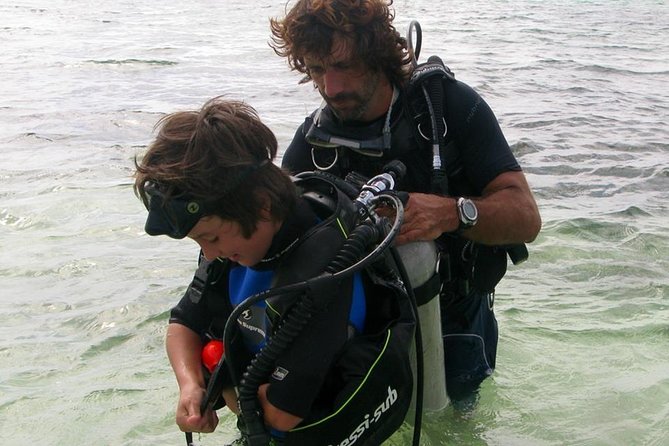
The core idea of PADI Discover Scuba is simple: you learn just enough to feel safe, fast. Before any open-water part, you go through theory covering diving physiology and a basic overview of the SCUBA unit. Then you move into confined water where the depth is shallow enough that you can stand up.
This matters for first-timers. If you panic, you are not trapped under conditions you cannot control. You can reset, breathe, and ask questions. You also practice the basic motions needed to use the regulator and manage buoyancy so you do not feel like you are guessing underwater.
From the way instructors were praised, the best sessions are the ones where the instructor stays calm and patient while you work through gear adjustments. Several participants specifically highlighted how they coached them through pressure issues, like ears hurting or difficulty regulating equalization. If you have any history of ear discomfort, tell the instructor early so they can guide your pace and technique.
The boat ride to the coral garden and the mooring line descent
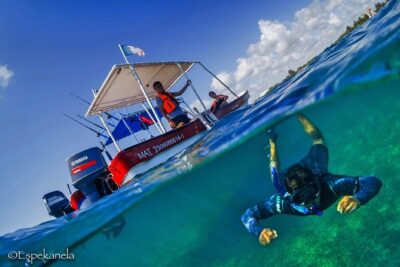
After the confined-water portion, you take a short boat trip, about 10 minutes, to the reef area. This is the “this is why I booked it” moment: you leave the training pool and head toward a coral garden.
Then comes a key safety and comfort detail. The max depth is set at 40 feet, and the bottom starts around 25 feet. The descent follows a mooring line, which makes the movement more controlled and reduces the chaos factor for new participants. It is easier to manage your body position when the descent is guided and predictable.
The reef setup is also designed for beginners. In most cases, your time underwater depends on how quickly you use air, with an average around 43 minutes. That means you are not on a strict timer, which is better if you get nervous at first and then settle in once your breathing rhythm clicks.
What you can expect underwater: depth, time, and the marine life
Your main underwater session is kept to beginner limits, with a max depth of 40 feet. In practical terms, that range is deep enough to feel real scuba, but not so deep that the experience becomes overwhelming. You typically start hovering around the 25-foot bottom zone, then explore within the allowed range.
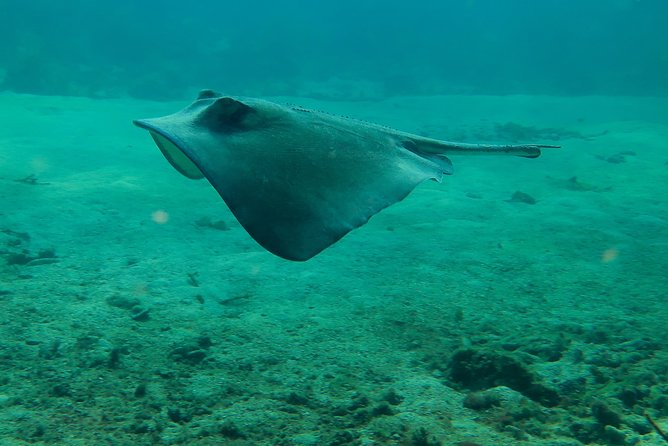
People describe clear water and lots of fish activity close to shore or just off the starting area. Several accounts mention seeing coral schooling fish, stingrays, turtles, and rays. One participant even described spotting lobsters in a hidden cave, which tells me the reef structure can be interesting even at these beginner depths.
Time underwater commonly lands around 40 to 45 minutes in real-world experiences. If you have slower air consumption, you may get longer. If you breathe quickly from nerves, it may be shorter, but the instructor should still prioritize safety and stable breathing over pushing your limits.
If seas are rough, the boat ride can feel intimidating. One participant said they struggled with the conditions and could not finish the open-water portion, and the crew stayed supportive and professional. That is a reminder to plan for weather and to speak up if you feel off once you are on the water.

Gear, bottled water, and the little comforts that reduce stress
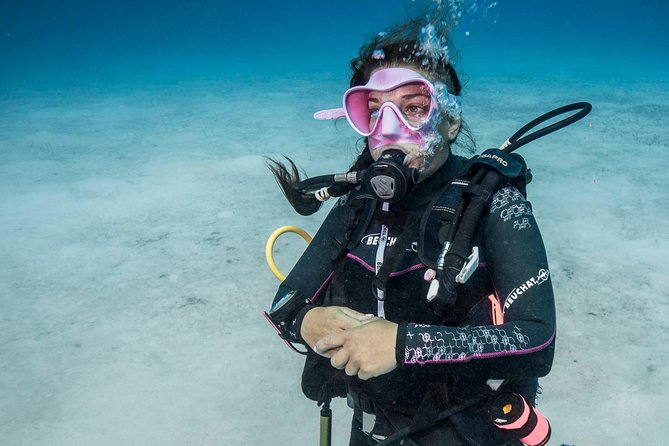
Included in your $100 price is use of scuba equipment plus bottled water. That is not just a cost saver, it is also stress control. You do not need to show up hunting for the right mask, regulator, or weight setup. The staff handles it, then checks you before you go in.
A couple of extra comforts show up in real experiences. Many people mentioned instructors managing the gear personally, which helps if your hands are shaky from nerves. Some people also reported fresh pineapple after the session, which is a nice reset after getting cold and dry-throated at the end.
One more thing: photography. At least one participant said the shop offered photography of the experience. That might be optional or package-based, but it is worth asking directly when you arrive so you know what is available and what it costs.
Price and value: what $100 buys you in Costa Maya
At $100 per person, this is one of the most affordable ways to try scuba-style equipment and go underwater under a structured training plan. The value comes from two parts: you get skills training before the reef, and your equipment is included.
A beginner-only trial that includes both confined-water practice and an open-water session would normally cost more if you had to rent gear, arrange instruction, and cover separate logistics. Here, the whole flow is built into one time block, about 3 hours 45 minutes, with small groups that can be capped at 16.
Also remember you are paying for safety procedures. The course is set to max depth of 40 feet, includes supervised descent along a mooring line, and adapts dive time to your air use. For first-timers, that supervision is worth real money because it reduces the odds of a scary moment.
If you are deciding between this and a longer certification course, this is a taste. It does not aim to turn you into a fully independent scuba participant. It aims to confirm whether the equipment feels manageable and whether underwater breathing and buoyancy are something you can enjoy.
Weather, rough seas, and communication in English
This experience requires good weather. If weather is poor, you should expect a rebook option or a full refund, so do not feel trapped if conditions cancel you.
Still, “good weather” can be vague at sea. Some participants described cloudy or stormy day activity with lots of fish and a great outcome. Others described extreme rough waters where the boat ride felt intimidating. If you are prone to motion sickness, this is worth taking seriously. Bring motion sickness support strategies that work for you, and consider not forcing yourself to continue if the conditions feel unsafe for your comfort.
On language: the listing says offered in English, but one participant reported that the dive master’s English was hard to understand. If you rely on clear English to absorb safety steps, ask the operator before you book. It can make the difference between feeling prepared and feeling confused.
Health and altitude rules you should take seriously
Before you go, check the medical guidance provided for the experience. You should speak with your doctor if you have high blood pressure, angina, or you take medication to control blood pressure. Also check if you have a history of a collapsed lung, or chest surgery.
You should also talk to your doctor if you have any history of seizures, blackouts, fainting, convulsions, or epilepsy, or if you take medication to prevent them. Heart disease, heart attack, heart surgery, or blood vessel surgery also call for medical clearance.
After the session, there is a specific altitude rule: you need a 12-hour period between the experience and ascending to an altitude above 300 meters or a thousand feet. This matters if you are flying soon after scuba practice. If your schedule is tight, plan your day so you do not stack activities that conflict with that window.
Who should book this, and who might want to pass
This is a strong fit for people who want to try scuba-style equipment without committing to a lengthy certification course. The minimum age is 10 years old, and the experience says most travelers can participate. It is also well-suited for families who want a shared activity with supervision and a clear teaching structure.
It is also useful as a refresher if you are already certified but not current. One participant described doing this with a spouse who was not certified, and the staff adjusted the plan so the certified partner did not have to repeat every instruction segment. That flexibility can be a big deal for groups with mixed experience levels.
If you struggle with ears equalizing, you might need extra time. Multiple participants praised instructors who calmly helped them through ear pressure and coached them until they could continue comfortably. Still, if you have any medical concerns, do not gamble. Follow the doctor-check guidance.
If you dislike uncertain sea conditions or you cannot handle boats, consider other water experiences. One participant ended up not completing the session due to rough conditions. The experience is designed for beginners, but it still involves getting to and from the reef by boat.
Should you book Mar Adentro’s PADI Discover Scuba course?
If you want a structured, beginner-friendly way to experience scuba equipment, you should seriously consider booking. The best reason is how the day is paced: theory first, then confined-water practice where you can stand, then a supervised reef session with a max depth of 40 feet. Add included equipment and bottled water, plus small groups up to 16, and it is good value for your first taste.
I would book especially if you like clear coaching and want a plan that prioritizes safety over speed. Look for instructors praised for patience, like Sebastian (often called Sea Bass) and Brenda, and you can expect close attention during the learning parts and the underwater session.
I would hesitate only if you know you struggle with motion sickness, have a medical condition that could make scuba unsafe, or if you feel you need very clear English instruction to understand safety steps. In those cases, ask questions before you commit, and be ready with a backup day if weather does not cooperate.
FAQ
How long is the PADI Discover Scuba session?
The total experience time is about 3 hours 45 minutes.
What is the maximum depth during the underwater part?
The maximum depth is 40 feet.
Do I need scuba certification?
No. This is designed to let you try scuba without a lengthy certification course, including skills training and an instructor-led underwater session.
Will I practice skills before going to the reef?
Yes. You start with theory, then basic skills training in confined water that is shallow enough to stand up.
Is scuba equipment included?
Yes. The experience includes use of scuba equipment.
Is bottled water included?
Yes. Bottled water is included.
Where does the tour start and end?
It starts at Huachinango, 77976 Q.R., Mexico, and ends back at the same meeting point.
What is the minimum age?
The minimum age is 10 years old.
Is there an altitude restriction after the experience?
Yes. You need a 12-hour period between the experience and ascending to an altitude above 300 meters, or a thousand feet.
What health conditions should I check with my doctor about?
The instructions say to check with your doctor if you have high blood pressure, angina, or take medication to control blood pressure, or if you have a history of collapsed lung or chest surgery, seizures or epilepsy, or heart disease or heart surgery.
Other Dives on the Wall
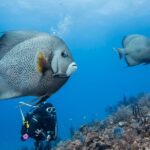
More Tour Reviews in Costa Maya

Just reviewed around Costa Maya



Scuba Diving, compared.
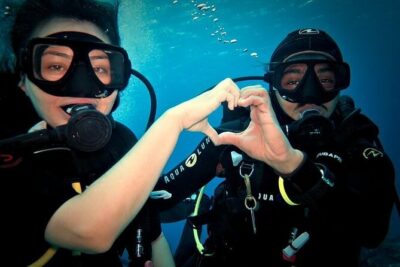 ★ 5.0Discover Scuba Diving in Cozumel Paradise Reef686 reviews
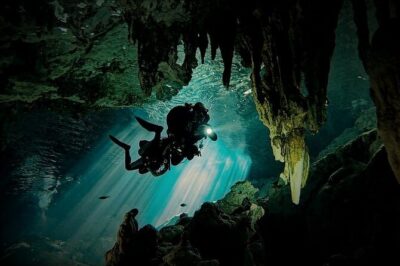 ★ 5.0Scuba Diving in Cenote Dos Ojos from Playa del Carmen453 reviews
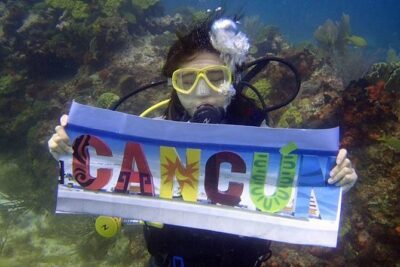 ★ 5.0Diving in the Mexican Caribbean for Beginners | 2 Tanks 2 Dives | All InclusiveFrom $190431 reviews
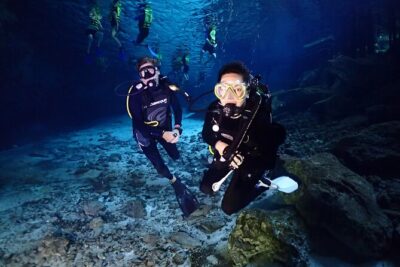 ★ 5.0Scuba Diving in Cenote Kukulkan from Playa del Carmen370 reviews
 ★ 5.0Discover Scuba Diving & Beach Club with Transportation In Riviera MayaFrom $150239 reviews
 ★ 5.0Two Tanks Scuba Diving for Beginners in CancunFrom $169233 reviews
 ★ 4.5SeaTrek Underwater Helmet Diving Experience in Downtown CozumelFrom $79214 reviews
 ★ 5.0Scuba Diving Under Water Museum and Reef for beginnersFrom $119189 reviews
Also on these lists