
Early starts pay off in Yucatán. This small-group day trip strings together Chichén Itzá and Coba, then cools you off with a swim at Ik Kil. I love how early you arrive to see major sights with fewer crowds, and I love the simple comfort details like an air-conditioned minivan plus lockers and life jacket for the cenote. The main drawback is the Chichén Itzá entrance fee is extra and the day is long, so plan for heat and lots of walking.
You’ll get pickup from select spots on the Riviera Maya (Playa del Carmen, Puerto Morelos, Tulum, and more), then spend the day with a professional guide, guided stops at each ruin, plus breakfast, buffet lunch, unlimited water, and soft drinks. It’s a packed combo, but it makes sense if you want the big-hitter pyramid site and the more spread-out, climb-ready ruins in one day.
Key things to know before you go
- Max 12-person group keeps the pacing easier to manage and the guiding more personal.
- Ik Kil includes a life jacket and locker, so the swim part is smoother than DIY.
- You beat crowds by starting early, which makes photos and walking much less stressful.
- Coba is the payoff for the active side of you, with a chance to focus on the Nohoch Mul pyramid.
- Chichén Itzá access fee is mandatory at pickup, so bring the extra cash or payment method you’ll need.
- Long day, real sun: this is a “leave early, nap later” kind of outing.
Other cenotes within half an hour of the 307
- Chichen Itza, Cenote, and Valladolid Tour★ 5.0 · 24,293 reviews
- Chichen Itza, Cenote & Valladolid Tour with Tequila and Lunch★ 4.5 · 15,789 reviews
- Cancun: Chichen Itza, Cenote & Valladolid Tour with Lunch★ 4.6 · 6,722 reviews
- Early morning Chichen Itza Tour: Cenote and Tequila Tasting★ 5.0 · 6,657 reviews
Chichén Itzá and Coba in one day: why this combo works
If you’re visiting the Cancun area and only have one full day, this is one of the more logical ways to use it. Chichén Itzá is the name everyone knows, but it is also the one that sells out or gets crowded fast. Pairing it with Coba, which is a bit less “tour-bus central,” gives you a real contrast in how the Maya world shows up on the ground.
The tour’s pacing is built around that contrast. You start with Chichén Itzá when it is still cool enough to enjoy walking and photographing. Then you head to Ik Kil for a swim that functions like a reset button, especially after hours in the sun. Finally, you end at Coba, where the ruins feel more open and where you can choose how ambitious you want to be.
This kind of itinerary is also good value because the day includes the big operational parts you would otherwise have to piece together: hotel pickup and drop-off, an air-conditioned vehicle, a guide at the sites, and entry and swim logistics for Ik Kil and Coba. You still pay for Chichén Itzá access separately, but at least you are not trying to solve all of that on your own at the worst possible moment.
Price and what you actually get for $159
At $159 per person, you are not paying just for “tickets and a van.” You are paying for a full guiding day plus the stuff that makes the day flow.
Here’s the value breakdown, based on what’s included:
- Breakfast and buffet lunch
- Unlimited water bottles plus soda/pop with lunch
- Professional guide all day
- Hotel pickup and drop-off by air-conditioned minivan
- Entrance fees included for Coba and Cenote Ik Kil
- Locker and life jacket use at the cenote
- A prebooked Chichén Itzá ticket intended to help you avoid lines at the ticket office
The one big surprise for many first-timers is that Chichén Itzá access is not included in the package price. You must pay it at pickup: $40 USD per adult and $5 USD per child. In other words, your all-in cost usually lands closer to about $199 for an adult, before you add anything personal like snacks, sunscreen, or optional rentals.
Is it still worth it? Usually yes, if you want both major ruins plus an actual cenote swim without the stress of arranging transport, guides, and timing yourself. If you were only aiming for Chichén Itzá, you could do it cheaper. If you want the full arc, Chichén Itzá plus Coba plus Ik Kil for one day, the structure makes the price make sense.
Pickup, timing, and the early-arrival advantage
This is the kind of tour where the schedule matters. The opening window is listed as 5:00 AM to 7:30 AM (depending on where you start). That early departure is not a random gimmick. Reviews consistently point out that arriving at Chichén Itzá before the biggest crowds hits is a major quality upgrade: cooler temperatures, easier photos, and more room to actually understand what you are looking at.
One review even called out a departure early enough that their group was among the first at Chichén Itzá around 8:30 AM. That matches the general logic of starting early: you get the site before it becomes a wall-to-wall experience.
It’s also a small-group setup. The tour is described as shared with a maximum group size of 12, with a maximum traveler cap of 15. That size is big enough for the van to feel lively, but small enough that you are not herded constantly like a human queue.
The trade-off is the long day. You will be in transit for hours. Bring a hat, and expect you may want to nap on the ride back.
Stop 1: Chichén Itzá, El Castillo to the ball courts
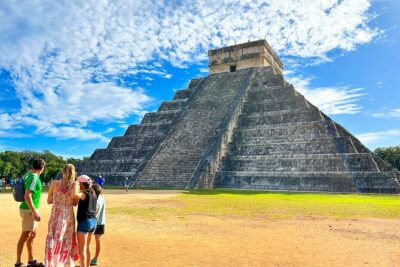
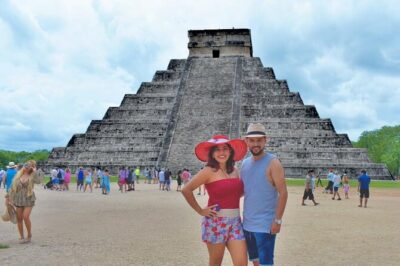
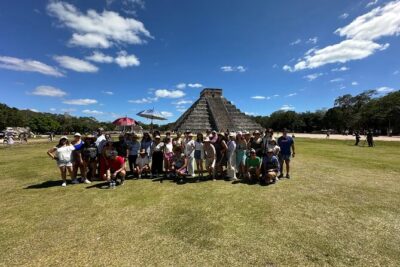
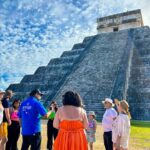
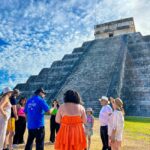
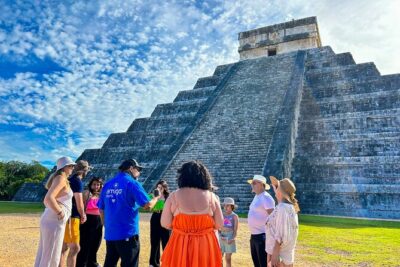
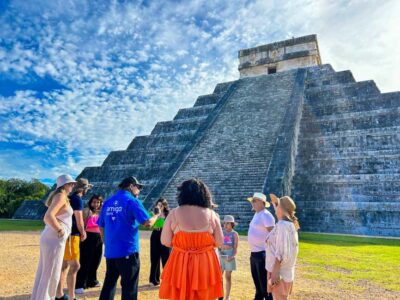
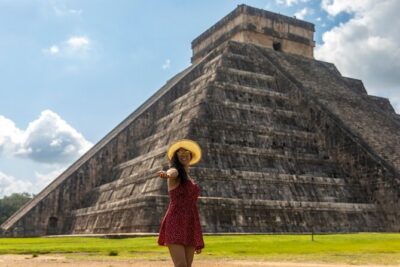
Chichén Itzá is why many people come to the Yucatán Peninsula. This stop is about 3 hours for the guided experience. You will see the essentials and also get the explanations that help it click, from architecture to Maya astronomy themes.
What you will focus on during the visit:
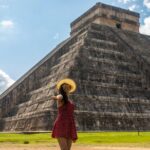
- El Castillo (also known as the Kukulkan Pyramid)
- El Caracol (the observatory)
- The Plaza of a Thousand Columns
- Plataforma de Venus (Temple of the Venus)
- Temple of the Jaguar
- The largest ball court in Mesoamerica
That list is the “greatest hits” version. The real benefit is the guided flow between them. Several people highlighted guides like Tonantzin and Mimi for putting the history into plain terms and for helping with pictures. Ariann was praised for being energetic and fun while still delivering real detail. Gabrielle and Maria (Mimi) were mentioned for finding good photo spots and making the sites feel meaningful.
Practical note: the Chichén Itzá entrance fee is mandatory and paid at pickup. One reviewer found the entrance fee handling annoying, and they also felt the total charged did not match what they expected. I recommend you do the boring thing that prevents stress: confirm the adult and child amounts ahead of time, have the right payment ready, and keep your eyes on the total you are told to pay.
If you want the “best version” of Chichén Itzá, treat those 3 hours like a guided sprint that also needs breaks. Wear shoes with grip, use sunscreen early, and do not underestimate the walking in the heat.
Other ways to do the pyramid, compared
Stop 2: Cenote Ik Kil swim with locker and life jacket
Then you get to the part most people remember most clearly: the swim at Ik Kil. This stop is about 1 hour, including time to change, follow the route down, swim, and get back up.
You’ll go with the gear the tour provides:
- Life jacket
- Locker
You’ll also learn the cultural context. Ik Kil is described as a sacred place once considered a road to the underworld for the Maya.
What it feels like in practice: it is often cooler water than you expect, and the swim is more of a refreshing dip than a long swim session. One review described the water as freezing cold, and that it is not really long enough to splash around forever. That is fine. The cenote exists to cool you down and reset you, not to turn this into a beach day.
A small practical tip based on reviews: towels are not clearly mentioned as provided, and one person noted no towel was provided and they dried off quickly anyway. I’d pack a compact towel if you have one, or at least plan on drying off fast and moving on.
What to wear: bring swimwear you can rinse quickly, and if you do not want to handle wet clothes later, keep a sealed bag handy. Also, expect you will be sun-exposed again right after the swim, so reapply sunscreen if you can.
Stop 3: Coba ruins and Nohoch Mul pyramid time
Coba is your final major stop, with about 2 hours on site. If Chichén Itzá feels iconic and tightly framed, Coba feels more spread out and more hands-on. The ruins are described as preserved and rebuilt, and the experience leans into the scale of the place.
You will see:
- Two ball courts
- The sacbe (the white roads) that once linked Maya cities
- The Nohoch Mul pyramid, which towers over the area
This is also where you may choose your own effort level. One review suggested bringing cash to rent a bike taxi, especially helpful for kids who might not want the longer walk to see more parts of the park. Even if you do not need it, it is useful to know the option exists if you want to adjust for your group.
Another review called out a very practical thing: bring bug spray for Coba. That is the kind of advice that is easy to ignore until you wish you hadn’t. If you’re going, pack it.
One caution from a less favorable review: the guide felt rushed at Coba and the person worried they missed an interesting area. That can happen on any timed tour. The solution is simple: when you get there, ask your guide what areas are the most important, and keep an eye on time so you are not left wondering what you skipped.
Food, water, and staying sane during the long ride
The day includes food that is designed to keep you from paying for everything separately and keeps your energy up for walking.
Included meals:
- Breakfast: juice, cookies, and a piece of fruit
- Buffet lunch: with a drink included (soda/pop)
Reviews are mixed on lunch quality. One person called it top quality, while another said the buffet left something to be desired. That tells me your best strategy is expectations management. The tour is doing real work to keep you fed, but it is not operating as a gourmet restaurant.
Still, having breakfast and lunch included is a big deal on this route. You are going to be out for about 12 hours (approx.). Add in early pickup, sun time, and travel time, and you will feel it if you skip meals.
The tour also provides unlimited water bottles on board and soft drinks with lunch. That matters because heat is not a side quest on this itinerary. Drink early, take small sips often, and do not wait until you feel thirsty.
If you are picky about food, consider bringing a small snack you control, like a granola bar. It’s not listed as included, but it can save your mood if the buffet is not your thing.
Guides can make or break the day, and this tour has strong ones
This is where the human factor shows up. In the reviews, names pop up with specific praise.
- Ariann was praised for being energetic, fun, and knowledgeable about the sites.
- Tonantzin was highlighted for explaining history clearly and for helping with photos.
- Maria (Mimi) was called out as one of the best guides people have had, with humor and strong explanations.
- Gabrielle was mentioned for pointing out great photo spots and keeping the day flowing well.
Then there are the outliers. One traveler felt the guide Eder was not very enthusiastic and also felt frustrated by how entrance fees were handled. Another said their guide at Coba seemed rushed.
So here’s the practical takeaway: the tour format is strong, but the guide experience can vary. If you want to maximize your odds, go in with a cooperative mindset and ask questions early. Guides are more likely to slow down and tailor explanations if you show interest rather than checking out.
Also, remember you are not just looking at ruins. You are learning a story you can only partially understand from signs. A good guide helps you connect what you see to why it matters.
Who this tour fits best, and who should skip it
This is best for you if:
- You want Chichén Itzá and Coba in one day without planning headaches
- You enjoy a guided walk and want context, not just photos
- You are comfortable with a full day in sun and heat, plus a cenote swim
- You prefer small-group comfort, not a huge bus crowd
It may not fit you as well if:
- You hate long driving days and long schedules
- You need lots of downtime between stops
- You are very sensitive to heat and walking distances (the tour asks for moderate physical fitness)
Families can work, too, but the key is stamina. One review described bringing little children, plus they used optional bike taxis for kids. If that’s you, bring cash and plan around shorter attention spans.
What to pack so the day feels easy
You do not need to overthink it, but a few items make a noticeable difference:
- Sunscreen and a hat
- Bug spray for Coba
- Swimwear plus a sealed bag for wet items
- Comfortable walking shoes with grip
- Payment ready for the Chichén Itzá access fee at pickup
- If your group might need it, cash for optional bike taxi rides
And yes, if you are prone to getting cold after water, bring a thin cover-up. Cenote water can feel very cool.
Should you book this Chichén Itzá, Ik Kil, and Coba small-group tour?
I’d book it if you want maximum Yucatán payoff in one day, especially the combination of Chichén Itzá early access, a true cenote swim, and then Coba’s more open ruins. The included guide time, meals, and cenote gear are exactly what make a one-day combo trip work without chaos.
I would hesitate if you dislike additional costs on the day itself, because Chichén Itzá access is mandatory extra. Also, if you are not into long driving days, you may find the schedule tiring even though the van is air-conditioned.
If you do book, set yourself up for success: start hydrated, bring the Chichén Itzá fee ready, pack bug spray, and go in ready to walk. With that, you’ll get a day that feels like two different parts of Maya life, linked by the one thing you can control in Mexico, timing, and a good break in the middle.
FAQ
Is the Chichén Itzá entrance fee included in the tour price?
No. Chichén Itzá access is not included in the package price. You must pay it at pickup: $40 USD per adult and $5 USD per child.
Do I need to buy a separate ticket for Chichén Itzá?
You will need to pay the Chichén Itzá access fee separately at pickup. The tour includes a prebooked Chichén Itzá ticket meant to help avoid lines at the ticket office.
What does the tour include for the Ik Kil cenote swim?
Cenote Ik Kil entrance is included, and you get use of a life jacket and a locker.
Are Coba and Ik Kil entry fees included?
Yes. Entrance fees for Coba and Cenote Ik Kil are included.
What kind of transportation is used?
The tour uses an air-conditioned minivan for transfers, with hotel pickup and drop-off.
How long is the tour?
It lasts about 12 hours (approx.).
What is included for meals?
A light breakfast is included (juice, cookies, and a piece of fruit). You also get a buffet lunch, plus soda/pop with the meal.
What group size should I expect?
This is a shared small-group tour with a maximum number of people listed as 12 (and a maximum of 15 travelers).
Deeper Into Coba
Chichen Itza, Three More Ways
Three More Cenotes Worth the Drive
Just reviewed around Cancun



Riviera Maya Cenote Tours, compared.
 ★ 4.5Chichen Itza, Cenote & Valladolid Tour with Tequila and LunchFrom $3415,789 reviews
 ★ 4.6Chichen Itza, Cenote & Valladolid Tour with LunchFrom $496,722 reviews
 ★ 5.0Early morning Chichen Itza Tour: Cenote and Tequila TastingFrom $266,657 reviews
 ★ 5.0Viator Exclusive: Tulum Ruins, Reef Snorkeling, Cenote and CavesFrom $1294,242 reviews
 ★ 4.5ATV Adventure, Interactive Bridges, Ziplines, Cenote and LunchFrom $493,903 reviews
 ★ 4.5Cancun Best ATV Tour, Ziplines and Cenote Swim with LunchFrom $483,406 reviews
 ★ 4.5Tulum Ruins and Cenote Guided Tour, from CancunFrom $492,592 reviews
 ★ 5.0Chichen Itza Gastronomic, Valladolid and Cenote ExtremoFrom $292,558 reviews
Also on these lists