
Review · PLAYA DEL CARMEN TOURS
Open Water Diver 2-Day PADI Course in Playa del Carmen
Waves, training, and a real PADI goal. This 2-day PADI open-water certification course in Playa del Carmen is built for beginners, with online theory, pool sessions, and English guidance from start to finish. The day-to-day pacing makes it feel doable, even if you are new to scuba gear. You also get English instruction, so you are not guessing what to do when things get practical.
What I really like is the small-group vibe, with a maximum of 8 travelers, which means more time for questions and fewer people competing for instructor attention. I also love that everything you need is handled for you: full scuba equipment plus a rental underwater computer, and a log book to track your skills and progress.
One consideration: the $299 base price can grow with extras, like lunch, photos, and the optional digital study materials listed separately, plus a boarding fee if you want pickup or training at Sandos Hotel.
Key points to know before you go
- 2-day format that combines online theory, pool work, and 4 open-water sessions for certification
- Small group size (max 8) for calmer learning and more instructor feedback
- Gear and rental computer included plus a log book, so you arrive ready to train
- Four open-water sessions by boat in Playa del Carmen’s coastal waters
- Certification limit: training to a maximum depth of 18 m / 60 ft, with buddy diving practices
Worth doing without ever leaving town
- From Playa del Carmen ATV Adventure with Ziplines, Cenote★ 5.0 · 2,041 reviews
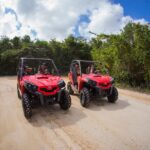
- Playa del Carmen Buggy Tour with Cenote Swim and Mayan Village Visit★ 5.0 · 1,747 reviews
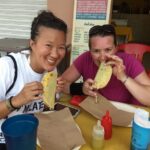
- Playa del Carmen Walking Food Tour★ 5.0 · 1,274 reviews
- Jungle Buggy Tour from Playa del Carmen Including Cenote Swim★ 5.0 · 1,253 reviews
PADI open-water certification in Playa del Carmen, built for first timers
Playa del Carmen is a smart place to learn because the experience is set up like a sequence, not a random series of trips. You start with the mental side (online knowledge), then you move to controlled skills in the pool, and only then do you go into open water for four practical sessions. If you like structure, this course style is reassuring.
I also like that the course keeps the focus on safety fundamentals, not just the fun part. You learn the basic technique and how to handle common scuba situations in a straightforward way. That matters because your confidence comes from doing the steps correctly, not from hoping nothing goes wrong.
If you want a certification you can use worldwide, the course is designed around that buddy system and includes the standard certification outcome. In simple terms, you are training for a real skill set, with a real instructor and a real course progression.
The schedule that gets you certified: online theory, pool practice, then open-water sessions
The learning flow is split into three phases. First comes online theory, so you understand how scuba works before you touch the water. Second, you do confined-water work in a pool setting to practice core skills. Third, you complete four open-water sessions, which are the hands-on tests of what you learned.
The timing is also clear. After the online theory review, you have two mornings for pool training and two afternoons for the four open-water sessions. That two-and-two rhythm is useful because it reduces the “what am I doing today” stress. You are not floating between locations with no plan.
For your expectations, this is important: the course is a certification path, not a casual try-scuba afternoon. You should show up ready to practice skills, follow safety instructions, and stay engaged in both water and classroom-style learning. If you treat it like a fun excursion only, you might feel rushed.
Pool training in confined water, where your confidence gets built
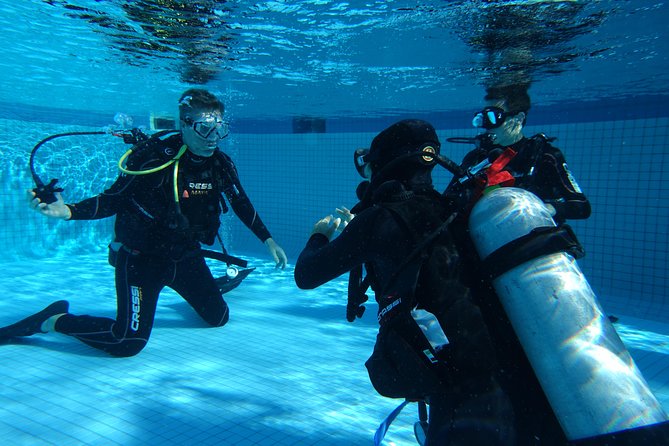
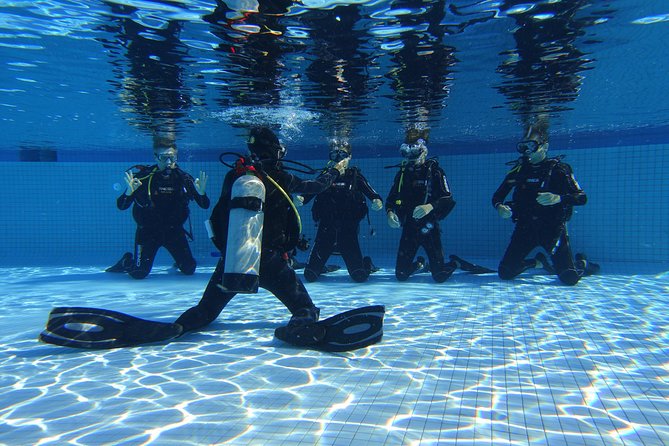
The pool portion is the heart of the early learning. In confined water, you get to focus on technique without the ocean adding extra variables like swell, currents, or changing visibility. You practice scuba skills step by step with an instructor guiding you through the mechanics and safety procedures.
This is also where you learn how to manage your body position, breathing, and basic equipment control. Even if you feel nervous at the start, pool sessions are meant to make the equipment feel normal. You learn the logic behind what you are doing, so later, open water feels like a natural next step.
One thing I pay attention to in any certification course is how much time you get to repeat skills. Because the group is limited, you have a better shot at getting feedback quickly. That helps if you need extra reminders about calm breathing, staying aware, or remembering the safety routine.
Open-water sessions by boat, and how conditions can change the plan
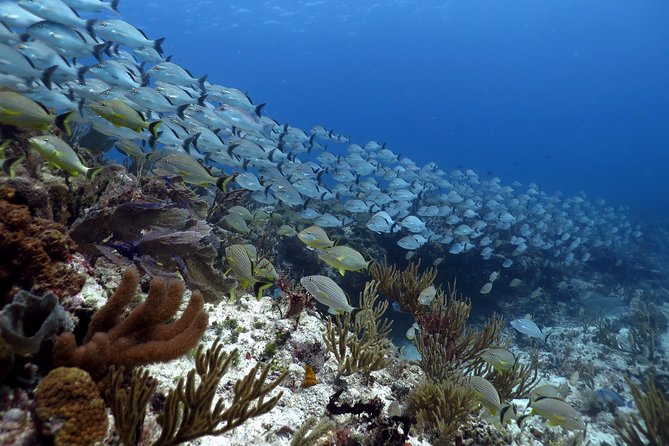
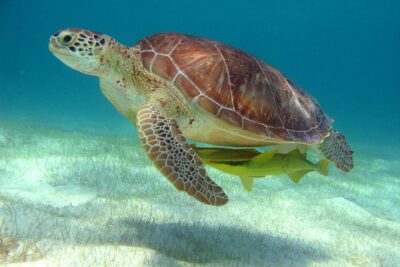
After pool training, you take the skills into the ocean for four open-water sessions by boat. This is where you start seeing what you came for: a real view underwater, plus the satisfaction of applying what you practiced.
The ocean adds variables. Currents and visibility can shift your experience day to day. In one recent experience with this course setup, currents made the first underwater session less clear, so the team adjusted and took the next session to a better location with improved visibility. That is a good sign. It shows the instructors are paying attention to conditions and prioritizing a safe, teachable experience.
Here is the practical takeaway for you: be mentally flexible. If the first session feels challenging because of movement or limited visibility, it does not mean you made a mistake or that the course is failing. In open water, conditions matter, and good teams adapt.
You will also complete the certification within the course limits, including the maximum training depth of 18 m / 60 ft. If you are someone who likes knowing boundaries, that specific number is helpful. It tells you what kind of underwater range your course is built around.
What is included in the $299 price, and what costs you should plan for
At $299 per person for a 2-day course, you are paying for much more than a single activity. You are paying for instructor-led theory support, pool training time, boat transportation for the four open-water sessions, and the full gear setup needed for the training. That includes a rental underwater computer and a log book, which is part of the certification framework.
Value-wise, the biggest win is that equipment logistics are handled. If you have ever tried to piece together rentals for a short scuba experience, you know how time-consuming and confusing it can be. Here, you focus on learning, not shopping.
That said, there are clear items that are not included. Lunch is not included, and photos are not included. Also listed separately: digital study materials (ebook, videos, and certificate) for $199 USD. That add-on can be a deal or a cost depending on whether you already plan to use the materials and whether you need them in digital format.
If you want training at Sandos Hotel, there is a 50 USD boarding fee. If you are not staying there or you are indifferent about pickup, you can skip that expense. Just double-check what you prefer, because it can nudge the total.
One more important reality check: the experience is non-refundable and cannot be changed for any reason. If your travel schedule is tight, plan buffer time so you do not get forced into a last-minute decision.
Meeting point details in Playa del Carmen, and how to plan your day
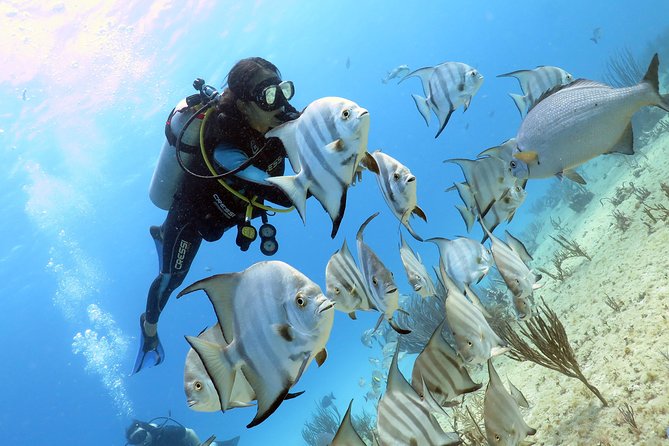
You meet at Scuba Libre, located at Calle 4 Nte Manzana 3 between 5a avenida y zona federal maritima, Centro, Playa del Carmen, Q.R., Mexico. The activity ends back at the meeting point, so you are not stuck figuring out a separate drop-off.
The operator lists hours from 8:00 AM to 5:00 PM, and the experience is offered daily during the listed dates. You can use that to plan around other Playa del Carmen activities, like beach time or a quick cenote visit, without feeling like you need to rearrange your whole trip.
Two practical notes I like here: it is near public transportation, and the tour ticket is mobile. That helps if you prefer using your phone for everything and you do not want to hunt for printed documents.
Who this course fits best, and who should think twice
This PADI open-water certification course is best for travelers who want a real credential, not just a one-day taste. If you meet the basics, meaning adequate swimming skills and good physical health, you will get a lot out of the structured training.
Age-wise, the standard Open Water certification requires you to be at least 15 years old, while PADI also offers a Junior option for ages 10 to 15. The minimum age for the course is listed as 10 years, so younger participants have a pathway too.
It is also a good match if you like guided instruction and clear boundaries. The training is designed around learning core scuba technique and safety, and finishing with certification. If you want a challenge, you will find it. If you want a relaxed afternoon, this is not that.
If you already have some underwater experience and want a refresher, this kind of course format may still feel useful because it revisits skills and safety steps. But if you are already certified and just want one or two fun sessions, you might want a different type of outing instead of completing a full certification.
Should you book this PADI open-water course in Playa del Carmen?
Book it if you want a clear, safety-first path to certification in a place that is built for beginner scuba training. The structure (online theory, pool mornings, then four open-water sessions by boat) makes it realistic for a short trip, and the small max group size is a big quality factor.
Consider it carefully if your budget is tight because lunch, photos, and digital materials can add cost, and the Sandos Hotel boarding fee applies only if you want that option. Also, because the experience is non-refundable, only book when your dates are solid.
If you want to leave Playa del Carmen with a PADI open-water certification and you like learning in steps, this is a strong choice.
FAQ
How long is the open-water certification course?
It runs for 2 days approximately.
What is the price per person?
The price is $299.00 per person.
Is instruction offered in English?
Yes, it is offered in English.
Where do I meet for the course?
The meeting point is Scuba Libre, Calle 4 Nte Manzana 3 between 5a avenida y zona federal maritima, Centro, 77710 Playa del Carmen, Q.R., Mexico.
What is included in the course price?
Included are a log book, full scuba equipment plus a rental underwater computer, pool training, four open-water sessions by boat, and a PADI certification.
What is not included?
Not included are photos, lunch, and digital materials (ebook, videos, and certificate) for $199 USD. There is also a 50 USD boarding fee if you want the course at Sandos Hotel.
What is the maximum depth you train for?
The course is within a maximum depth of 18 m / 60 ft.
What is the maximum group size?
The maximum group size is 8 travelers.
More Tour Reviews in Playa del Carmen
More Without Leaving Playa
Just reviewed around Playa del Carmen

Playa del Carmen Tours, compared.
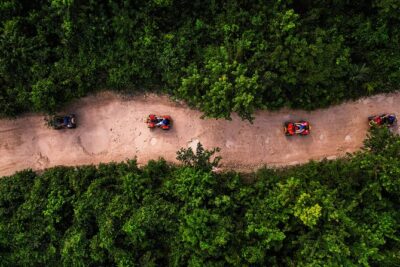 ★ 5.0From Playa del Carmen ATV Adventure with Ziplines, CenoteFrom $492,041 reviews
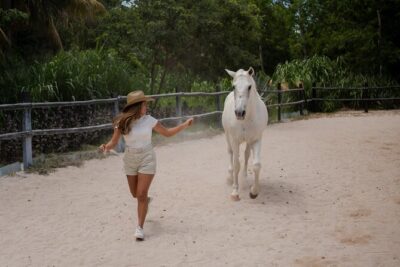 ★ 5.0Horseback Riding and Cenote Swim from Cancun or Playa del CarmenFrom $1201,780 reviews
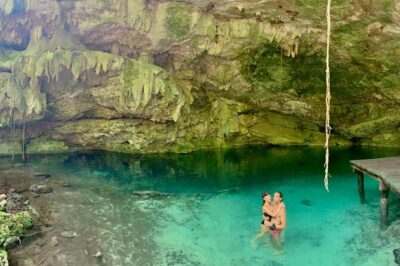 ★ 5.0Playa del Carmen Buggy Tour with Cenote Swim and Mayan Village VisitFrom $991,747 reviews
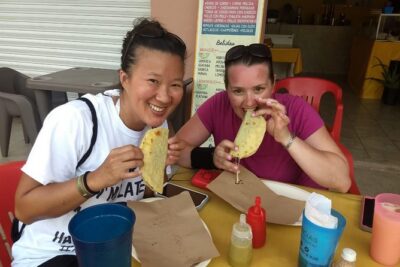 ★ 5.0Playa del Carmen Walking Food TourFrom $841,274 reviews
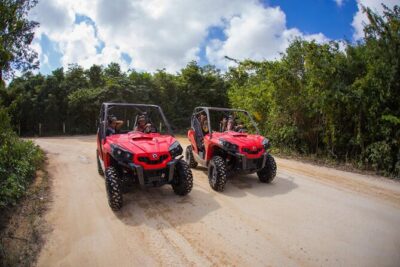 ★ 5.0Jungle Buggy Tour from Playa del Carmen Including Cenote SwimFrom $1101,253 reviews
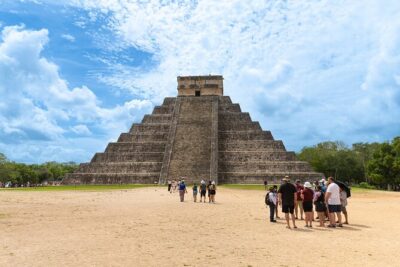 ★ 4.5Chichén Itzá Ancestral Tour from Playa del Carmen with CenoteFrom $24995 reviews
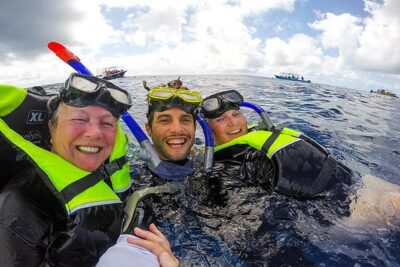 ★ 5.0Whale Shark Tour from Cancun, Playa del Carmen, Tulum and Riviera MayaFrom $199929 reviews
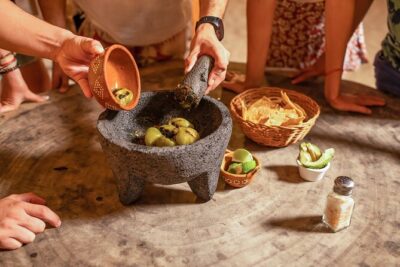 ★ 5.0The Taco Tour in Playa del CarmenFrom $139923 reviews
Also on these lists