
Review · CANCUN TOURS
Cancún: Underwater Museum & Reef for Certified Scuba Divers
Two worlds meet under Cancun water. I love the way Manchones Reef turns into a living hallway of fish, and I also love the surreal feeling of finning past MUSA statues sitting about 30 feet down. One catch to plan for is the extra $20 USD per person reef preservation fee, which comes on top of the tour price.
With two tanks and an instructor, you get time for the artificial reef art and a separate look at a natural coral area that can include turtles and even a stingray. This is also not a casual try-it-out outing, so if you do not have Open Water certification or you fall into one of the medical and age limits, you should skip it.
Key things to know before you go
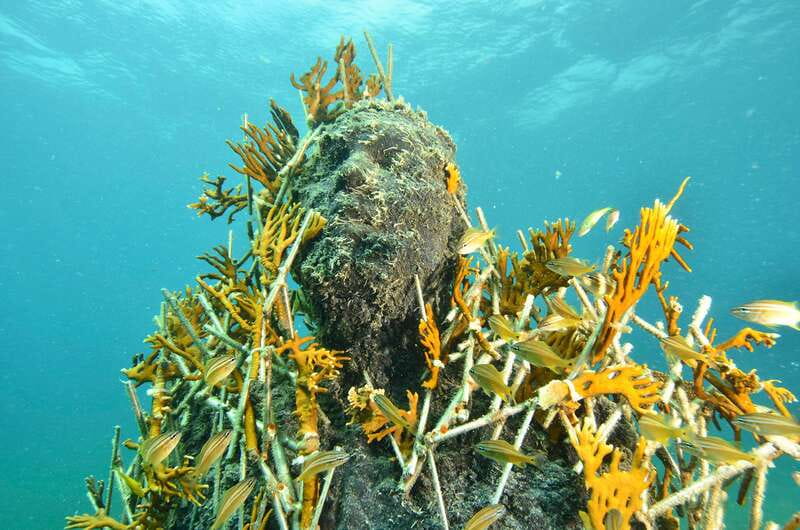
- Manchones Reef is your main underwater setting, with coral-covered sculptures located around 30 feet down
- You get 2 tank sessions, split between the Cancun Underwater Museum area and a natural coral reef look
- Expect marine life beyond the statues, including turtles and colorful fish
- MUSA is art plus reef support, started in 2009 and designed as an artificial habitat to help natural reefs recover
- Open Water certification is required, and the trip is meant as a refresher or for junior divers who already have training
- Budget for the reef preservation fee, $20 USD per person, plus possible wetsuit rental or sale
More that leaves from the Cancun hotel zone
- Cancun: Chichen Itza, Cenote & Valladolid Tour with Lunch★ 4.6 · 6,722 reviews
- Private Roundtrip Transportation from Cancun Airport to Cancun Hotel Zone★ 5.0 · 5,086 reviews
- Cancun ATV Jungle Adventure, Ziplines, Cenote and Tequila Tasting★ 4.5 · 4,873 reviews
- Cancun Best ATV Tour, Ziplines and Cenote Swim with Lunch★ 4.5 · 3,406 reviews
Manchones Reef and the 30-Foot Gallery of MUSA Statues
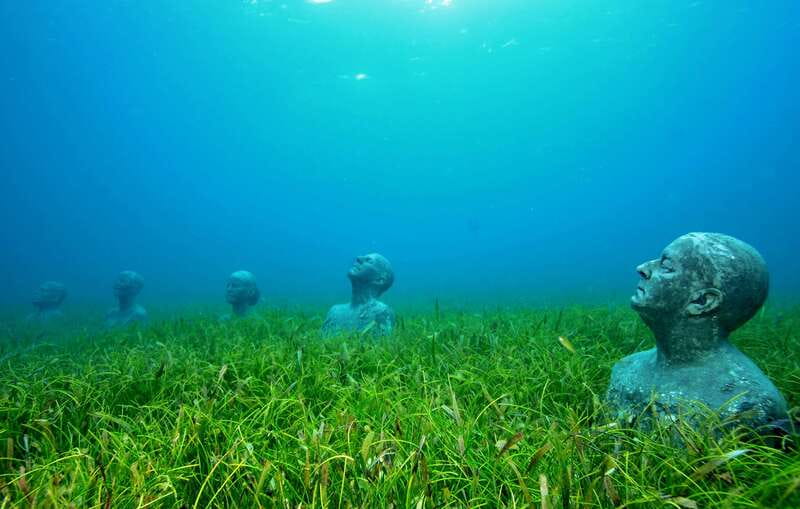
Cancún’s Underwater Museum of Art, known as MUSA, is the star attraction here, but the real hook is where you see it. You head out to Manchones Reef on a boat, and then you enter a world that feels part science project, part public art installation, and part underwater nature walk.
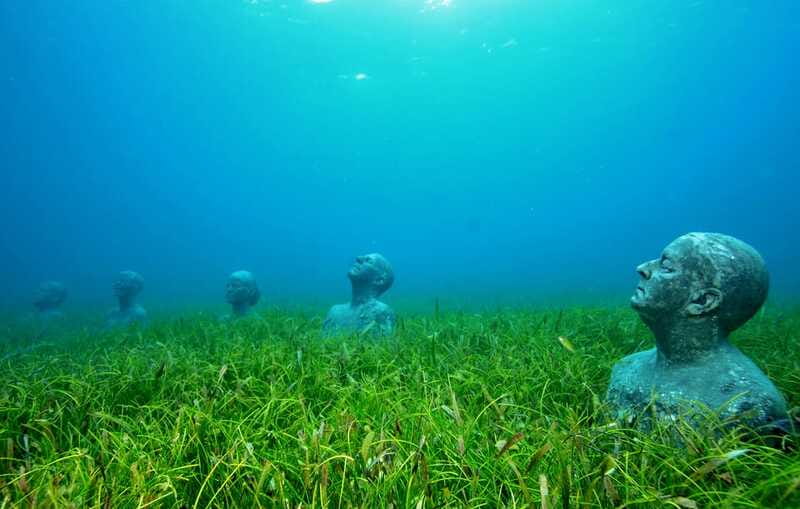
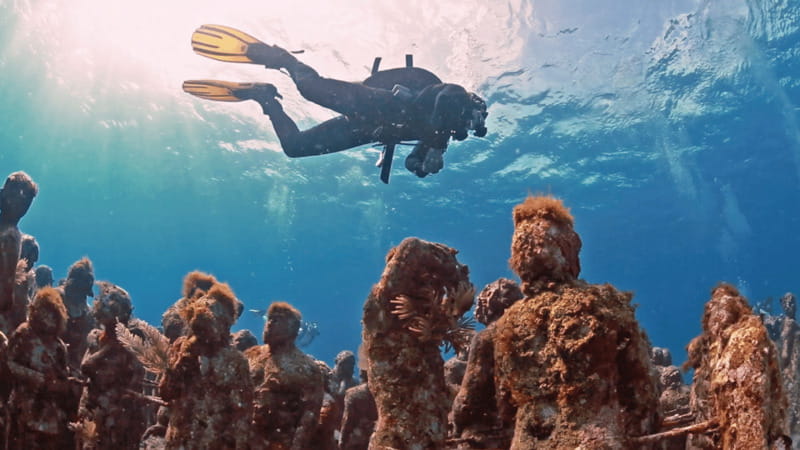
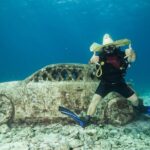
The first underwater highlight is the museum’s sculpture field. You’ll swim past coral-covered statues arranged like a gallery, with hundreds of figures sitting around 30 feet underwater. The numbers are big on purpose. The collection totals over 470 life-sized sculptures, so you are not looking at a couple of props. It feels like an entire city of art you can move through.
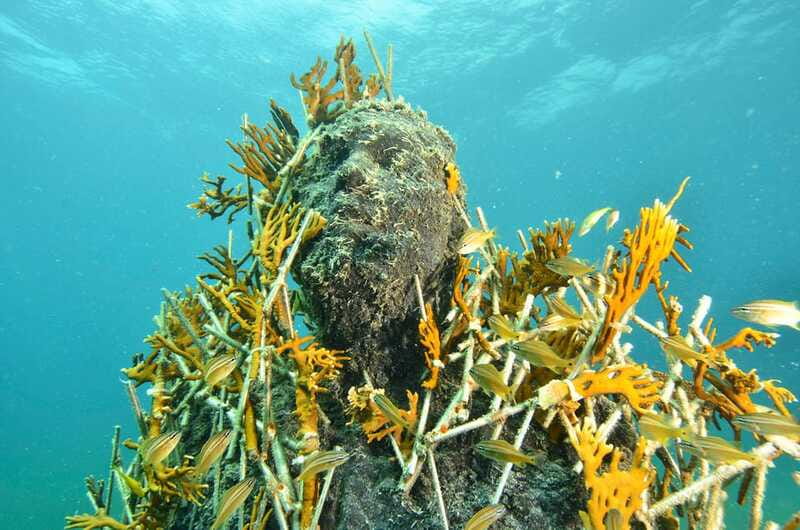
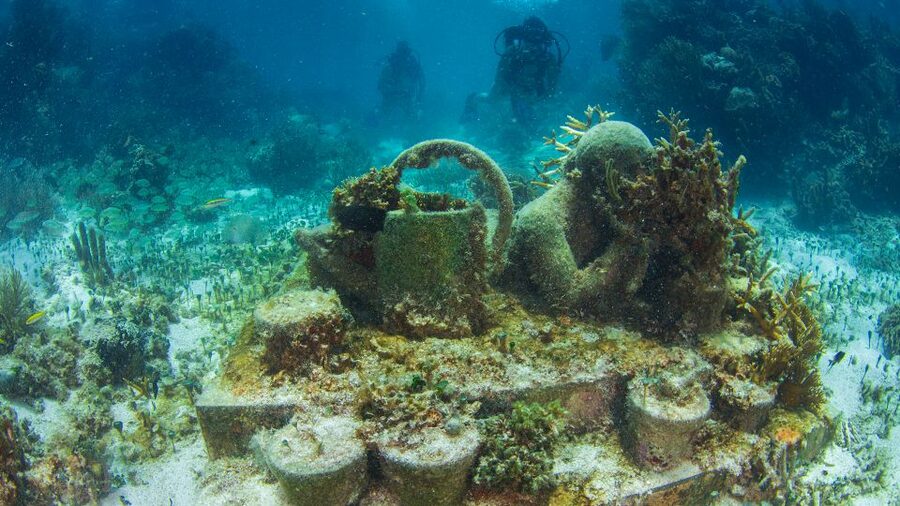
What I like most about this setup is how it changes your attention. Above water, art can be still. Underwater, it becomes something you travel through. As you glide along the statues, coral growth turns the figures into habitat, and fish treat the whole scene like shelter. That means the museum is not just something you stare at, it is something you see with the fish moving all around it.
There is also a practical side. Because this is a structured experience for certified divers, you are guided through the space rather than just free-floating. That usually makes the experience less stressful, especially if you are coming back after time away from training.
A possible drawback to keep in mind: the reef fee is extra. It is normal for these reef-support projects, but it can surprise you if you budget only the headline tour price.
Two-Tank Schedule: Art First, Then Natural Coral and Turtles
This tour is built around a simple idea: you want variety in one half-day. You do that with two separate tank sessions.
First, the plan focuses on the museum area at Manchones Reef. You spend time exploring the sculpture field with coral-covered statues. You get the “wow” effect right away, because the underwater museum is the main visual moment.
Then you switch gears for the second tank. Instead of art structures, you look at a natural coral reef area with a different feel. This is where you’re more likely to notice the reef itself as a living ecosystem: turtles cruising by, and lots of colorful fish working the current and hiding spots.
I find that contrast matters. The statues are memorable, but the natural reef is what reminds you that this whole project is designed to support real underwater life. Seeing both parts back-to-back helps you connect the art to the ecology.
One more note from the experience style here: the trip is described as a good refresher option. That often means the overall flow is not meant to be chaotic or technical. It is still scuba, and you do need to be comfortable with buoyancy and your certification, but the format is built for divers who want a meaningful underwater outing without feeling like they are taking on a totally new challenge.
Why MUSA Matters: Art That Helps Reefs Recover
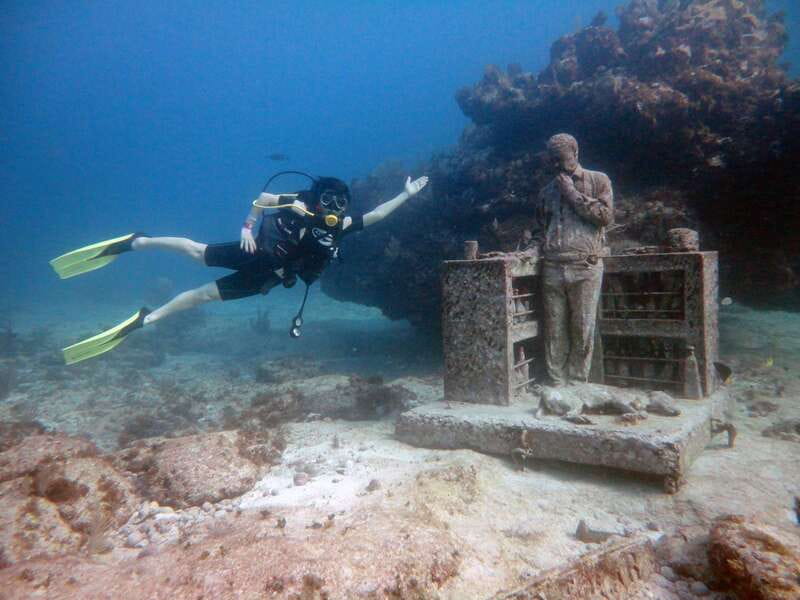
MUSA is more than a photo opportunity. It’s a reef-building concept that started small and grew into a full program.
The museum began as a project in 2009, when there were just three statues. Since then, it expanded into a large underwater collection paired with an artificial reef structure. The concept is straightforward: the sculptures are placed in a way that supports marine life and helps natural reefs recover.
For you, that matters because it changes how you should think while you are in the water. Instead of treating the museum like a rigid showpiece, you treat it like living infrastructure. Coral growth on the sculptures is not just decoration, it’s part of the reason the museum can function like habitat. When fish move in and turtles cruise through, it is not random. It’s exactly what the project is designed to encourage.
This also makes the experience feel more grounded. Yes, it’s surreal to swim among life-sized figures. But the deeper satisfaction comes from realizing the underwater art has an environmental purpose.
And if you like learning while you travel, you’ll also appreciate that the museum has a clear story. It didn’t start big. It started with a few pieces, then expanded over time into something massive, with hundreds of sculptures placed underwater.
What You Need to Know About Certification, Medical Clearance, and Limits
This is a scuba experience for certified divers, not a beginner intro. You’ll need to present your Open Water certification before you go. That requirement is not there to be picky. It’s there because the tour is built for divers who can handle basic equipment control and underwater awareness.
The trip is also described as a good refresher. If you have training but you’re returning to the water after a break, this can be a structured way to get your rhythm back. It can also work well for juniors who are old enough and appropriately certified.
That said, you should be honest about who this is not suitable for. It is not recommended for:
- children under 10
- pregnant women
- people with mobility impairments, including wheelchair users
- people with respiratory issues
- people over 65
- anyone with recent surgeries
- divers without certification
The medical side is important too. You are asked to review a medical dive clearance form before the activity. If you answer yes to any questions, you will require authorization from your doctor. If you want to plan smoothly, do this early at home so you are not scrambling the day of.
You can use the SDI medical clearance form here: medical form.
Also, keep the rules in mind while packing yourself for the day. Alcohol and drugs are not allowed, and baby carriages are not permitted.
More collections and small museums nearby
Price and the Real Value of a 2-Tank MUSA Day
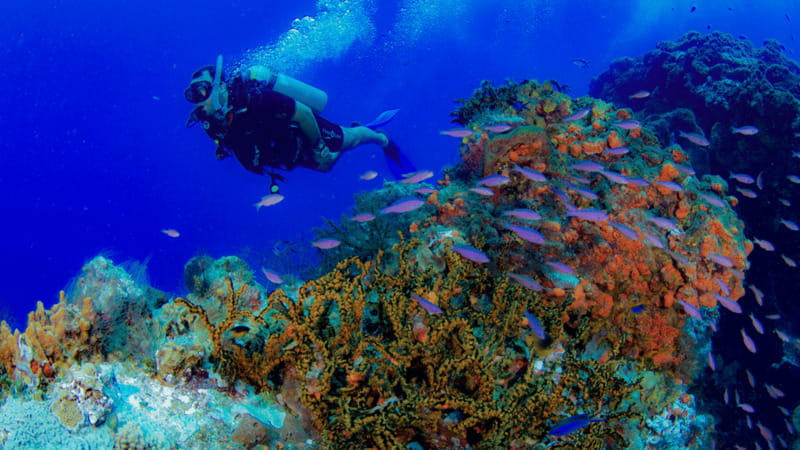
The headline price is $98 per person, and the included basics are worth checking carefully: you get an instructor and 2 tanks. For many divers, that combination is where the value comes from. You are not just buying access to an underwater site. You’re buying guided time with equipment support and a plan that splits the experience between the museum and a natural reef.
Now for the part people sometimes miss. There is an extra reef preservation fee of $20 USD per person that is not included. On top of that, photos and videos are not included. If you care about getting underwater media, plan for that cost separately.
Your wetsuit situation is also not included automatically. Wetsuits are available for sale or rent in the boutique, so if you get cold easily or you prefer proper fit, check what you want beforehand.
So what does value look like in real life? It comes down to this:
- You pay for two separate underwater opportunities
- You get guided exploration with an instructor
- You see MUSA sculptures plus a natural coral reef session
- You still should budget the additional reef fee and any wetsuit option
If you’re the type of diver who wants variety in one half-day, this format makes sense. If you only want the statues and you already know you will rush through marine life, you may feel the cost more directly. But if you want a meaningful experience that connects art to ecosystem, the pricing is easier to justify.
Your 4.5 Hours Plan, From Check-In to Museum to Reef
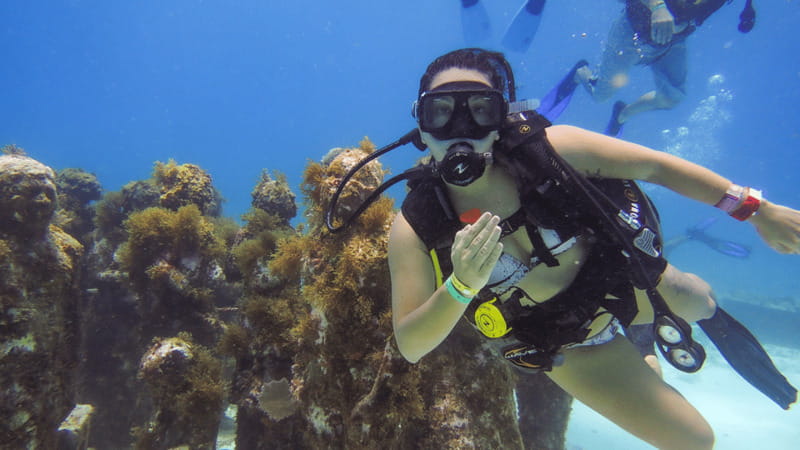
This is a 4.5-hour activity. That time is how you fit the full experience without it becoming a whole-day ordeal.
You’ll check in at the main front desk. Give yourself a little buffer. The day-of flow depends on everyone showing up properly, equipment prep, and getting everyone on the boat for the reef locations.
From there, you head to Manchones Reef. The tour structure is simple and repeatable:
- Boat ride to the reef area
- First tank session focused on the sculpture field at around 30 feet underwater
- Second tank session focused on the natural coral reef, with chances to see turtles and lots of colorful fish
- Wrap-up and return after your second tank
A practical way to get more out of both tanks is to think like a curator, not a tourist. In the statue area, look at how coral has grown on different parts of the sculptures. In the natural reef area, shift your focus to movement, the way fish react, and where turtles tend to travel in a reef setting.
Also, wear the right mindset for a mixed art and nature experience. The museum is built to look incredible, but it’s also fragile as habitat. Your best photos and your best underwater memories usually come from controlled buoyancy and slow movement, letting the fish come to you rather than forcing the moment.
One more helpful detail: the experience is described as relatively manageable for divers with less experience. That matches the idea of it being a refresher outing. Still, you should be comfortable in your gear and confident with your Open Water skills before you show up.
Should You Book This Cancun Underwater Museum Experience?
Book it if you:
- are Open Water certified and want a structured, instructor-led outing
- want the unique combo of MUSA sculptures plus natural coral in one trip
- enjoy marine life and want a real chance at seeing turtles and other reef species like colorful fish
- like the idea that the art is doing something meaningful, supporting reef recovery rather than just being placed underwater for looks
Think twice if you:
- are not comfortable meeting the certification and medical clearance requirements
- fall into the listed limits, like respiratory issues, recent surgeries, pregnancy, age 65+, or mobility constraints
- only want a quick stop for the statues and do not care about the natural reef portion
- want photos and videos provided automatically, because those are not included
If your goal is a memorable half-day that feels both creative and alive, this one has a lot going for it. Just go in with the right expectations: you are not doing a beginner swim, you are doing a real underwater experience with two tanks, guided by an instructor, in one of the most famous underwater art and reef environments in Cancún.
FAQ
Do I need scuba certification for this tour?
Yes. You must present your Open Water certification. This experience is not for divers without certification.
How long is the Cancun Underwater Museum & Reef experience?
The duration is 4.5 hours.
What is included in the price?
The tour includes an instructor and 2 tanks in Cancun waters.
What extra fees should I expect?
A reef preservation fee of $20 USD per person is not included. Photos and videos are also not included, and wetsuits are available for sale or rent in the boutique.
Where do I check in?
Please make the check in at the main front desk.
What languages are available with the guide?
The live tour guide is available in English and Spanish.
Is there a medical form I need to complete?
Yes. You must check out the medical dive clearance form before the activity. If you answer yes to any questions, you will need authorization from your doctor.
Who is this tour not suitable for?
It is not suitable for children under 10, pregnant women, people with mobility impairments (including wheelchair users), people with respiratory issues, people over 65, people with recent surgeries, or divers without certification.
What is not allowed during the activity?
Alcohol and drugs are not allowed, and baby carriages are not permitted.
Other Collections Nearby
More Tour Reviews in Cancun

Cancun, Same Coast, Different Day



Just reviewed around Cancun





Cancun Tours, compared.
 ★ 4.6Chichen Itza, Cenote & Valladolid Tour with LunchFrom $496,722 reviews
 ★ 4.5Cancun Best ATV Tour, Ziplines and Cenote Swim with LunchFrom $483,406 reviews
 ★ 4.5Tulum Ruins and Cenote Guided Tour, from CancunFrom $492,592 reviews
 ★ 5.0Half-Day Sea Turtle and Cenote Snorkeling Tour from Cancun & Riviera MayaFrom $992,039 reviews
 ★ 5.0Adults only Hip Hop Sessions Boat Party CancunFrom $1051,797 reviews
 ★ 4.5Reef Snorkeling in National Park from Cancun with Beachside LunchFrom $441,781 reviews
 ★ 5.0Horseback Riding and Cenote Swim from Cancun or Playa del CarmenFrom $1201,780 reviews
 ★ 4.55-in-1 Cancun Snorkeling: Turtles, Reef, Musa, Shipwreck, CenoteFrom $791,678 reviews
Also on these lists