
Review · CANCUN TOURS
Cancun: Scuba Diving for Beginners, 2 Dives
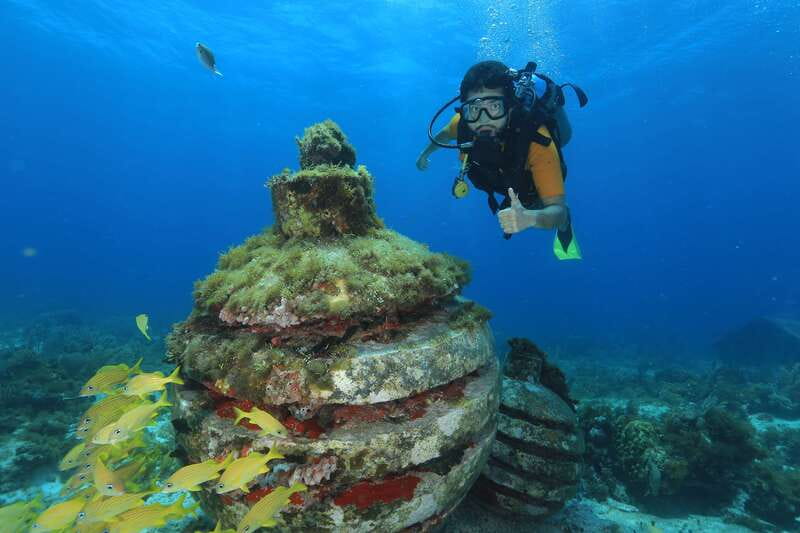
Your first tank trip starts in a pool. This beginner scuba program in Cancun takes you from basic skills to two standout underwater stops, including the famous MUSA museum.
I love how small the groups are, with a cap of 8, so instruction stays personal and calming. I also love that you get two totally different experiences back-to-back, museum sculptures first, then reef life at Manchones.
One consideration: you must plan for extra costs and requirements. The MUSA entrance fee is 500 Mexican Pesos per person, and you need to swim and complete skills in the water for safety, with no refund if you cannot.
Key things to know before you go
- No certification required, you learn fundamentals then head out for two tank sessions
- MUSA Underwater Museum and Manchones reef, two very different underwater worlds
- Small group, up to 8, plus English and Spanish instruction
- Full gear plus wetsuit included, so you show up and get kitted quickly
- No sunscreen allowed, so plan sun protection with your clothing instead
- Two tank times plus a pool lesson, built for first-timers who want real confidence fast
More that leaves from the Cancun hotel zone
- Cancun: Chichen Itza, Cenote & Valladolid Tour with Lunch★ 4.6 · 6,722 reviews
- Private Roundtrip Transportation from Cancun Airport to Cancun Hotel Zone★ 5.0 · 5,086 reviews
- Cancun ATV Jungle Adventure, Ziplines, Cenote and Tequila Tasting★ 4.5 · 4,873 reviews
- Cancun Best ATV Tour, Ziplines and Cenote Swim with Lunch★ 4.5 · 3,406 reviews
How the 2-tank beginner scuba program runs in Cancun
This is a half-day style scuba experience designed for people who have never done it before. You’ll start with theory and pool practice, then move into the ocean for two tank sessions with trained instructors.
The big selling point for you, as a first-timer, is structure. You don’t just get gear and hope for the best. You learn the core breathing and buoyancy basics in a controlled setting first, then build on it in open water.
You also get variety. The program includes one stop at the MUSA Underwater Museum and a second stop at Manchones reef. That mix helps you see why scuba matters, not just what it feels like.
Morning flow: check-in, paperwork, and pool skills
Check-in starts at 8:00 AM, and the boat leaves at 9:30 AM. The morning is packed but not chaotic, because the instructors want you to feel comfortable before you ever get in deeper water.
You’ll fill out a short medical form first. Then you get theory lessons and pool practice focused on the basics you actually use underwater, not random trivia. Expect clear safety talk, plus equipment walkthroughs for the regulator, mask, fins, and BCD.
In the pool, you practice essential skills. This is where you learn how to equalize and how to handle common moments like water in your goggles or losing your regulator position. Several first-timers in the feedback said the guides stayed patient and close, even when someone felt a little nervous.
Your underwater stop #1: MUSA Underwater Museum
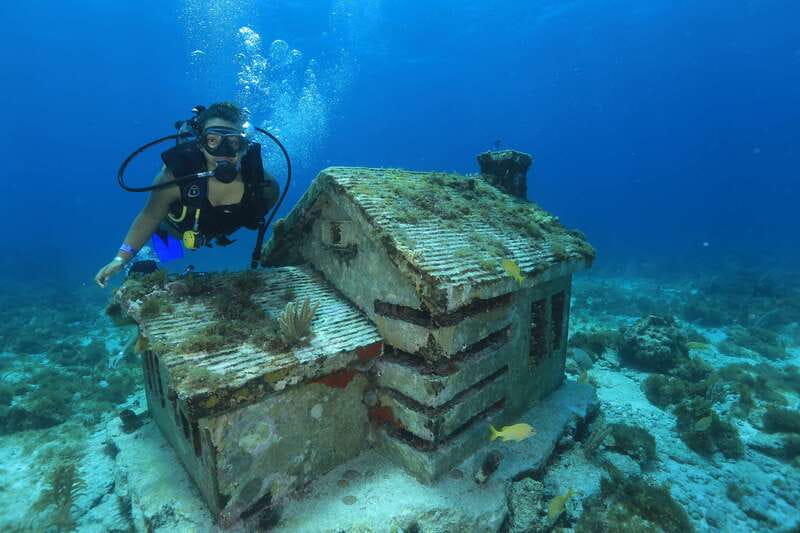
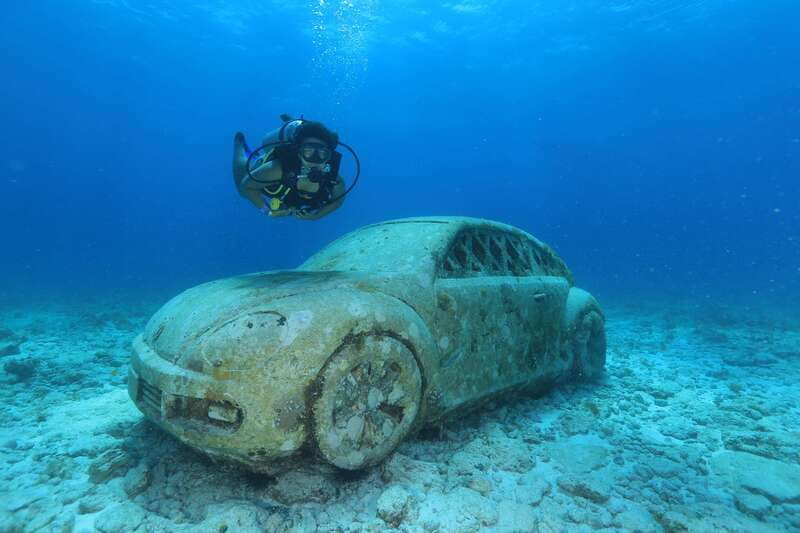
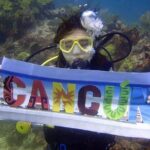
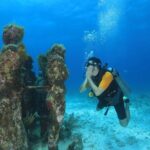
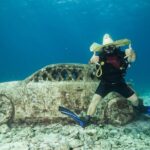
Your first ocean tank session is at the MUSA Underwater Museum. This is the place that makes people stop and stare. Instead of only coral and fish, you’re looking at sculptures and marine life living together underwater.
What I think you’ll enjoy most is the pacing. The museum site works well for beginners because you can take in the shapes while the instructor keeps an eye on comfort and buoyancy. You spend real time underwater, and you’re not rushing through the ocean minutes.
In the experience notes, people mention great visibility and plenty of marine life around the structures. You might see turtles, stingrays, lobsters, and other reef fish as you follow the guide’s plan.
A practical heads-up: the MUSA entrance fee is not included. It’s 500 Mexican Pesos per person, so budget that before you arrive.
Underwater stop #2: Manchones reef for colorful reef life
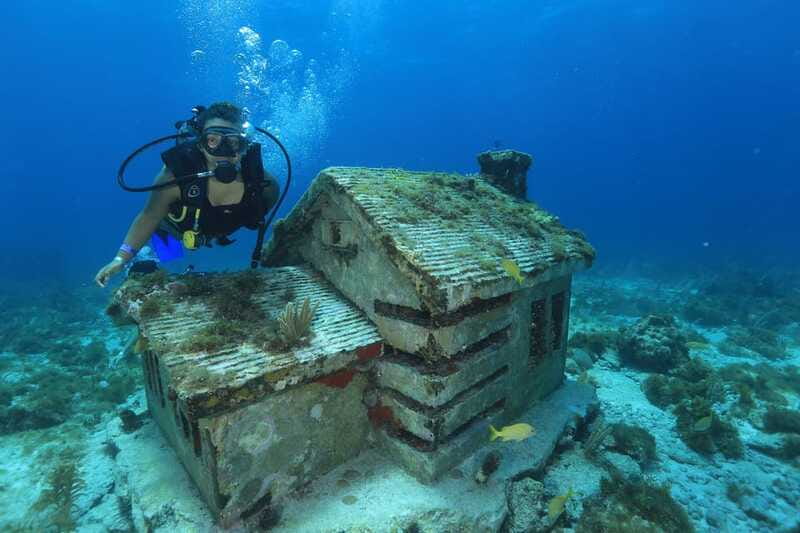
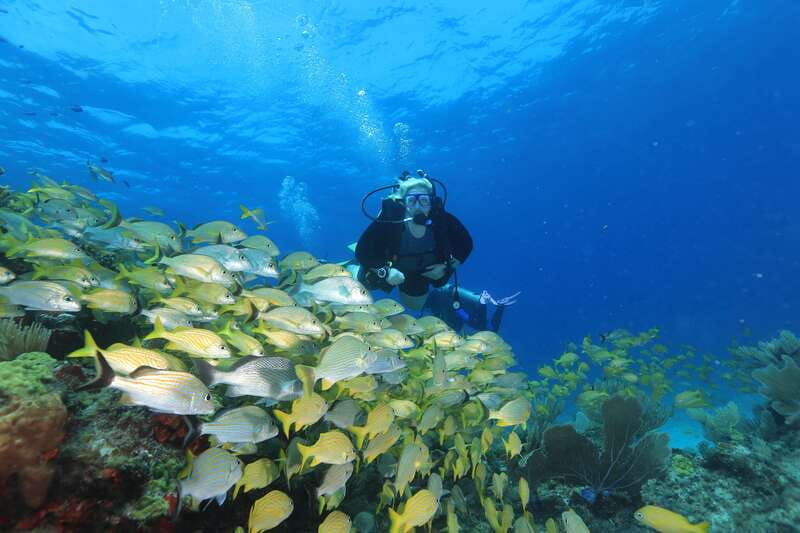
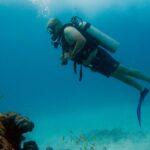
After the museum, you’ll head to the second site: Manchones reef. This stop shifts the focus from sculptures to coral and typical reef wildlife.
This is where your training pays off. Good buoyancy and calm breathing let you move slowly and actually watch what’s on the sea floor. The feedback repeatedly points to guides staying close, checking in regularly, and helping you spot creatures you might miss on your own.
People mention starfish, nurse sharks, colorful fish, and plenty of reef activity. One of the best parts, especially if you’re new, is how quickly the environment starts to feel like a living scene instead of a lesson.
It also helps that this is the second session. If you felt a little shaky during the first underwater time, by the second you usually know what to expect and can relax more.
More dives along the same wall
Gear, wetsuit, and what to expect on the boat
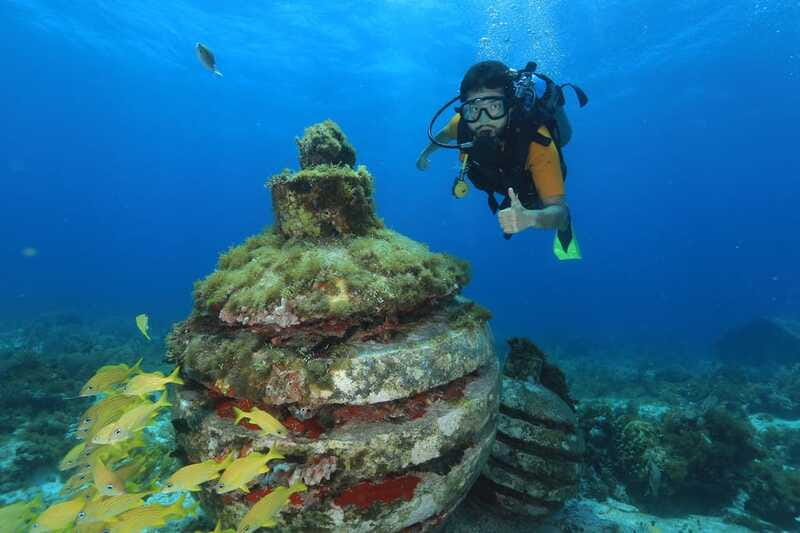
Full scuba equipment is included: BCD, regulator, mask, and fins, plus a wetsuit. That matters for value, because beginner rentals and extra gear can add up fast if you book separate components.
Instructors also help you pick gear fit, including wetsuit sizing and fin comfort. A few people specifically said staff helped them choose the right fins and wetsuit so they weren’t stuck with gear that didn’t work for their body.
On the boat, the program includes purified drinking water. Some of the feedback adds that there are snacks on board, which is helpful if you’re coming in hungry before check-in.
If you’re prone to motion sickness, plan for it. There are reports of people getting seasick during the boat ride because the trip from the harbor to the sites can take time. I’d rather you bring a basic plan than have your morning become a recovery mission.
Price and value: what $167 includes and what costs extra
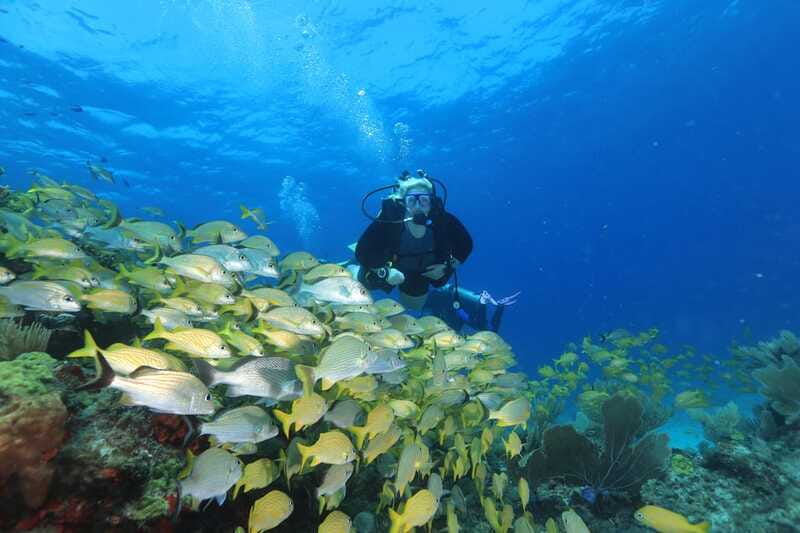
The price is $167 per person for a total duration of 5 hours, with two tank sessions. That base cost includes your pool lesson, theory, full equipment, wetsuit, and purified drinking water.
The biggest extra you should expect is the MUSA entrance fee, 500 Mexican Pesos per person. Photographs and videos are optional, so you can decide on the spot after you see what you want saved from your day.
Transportation from your hotel is not included. So if you’re staying at a resort without easy pickup, you’ll need to cover getting to the meeting spot yourself.
Here’s why I still think this can be good value for the right person. You’re paying for a full beginner pathway, not just an ocean outing. Pool skills plus two underwater stops at major locations, with small group attention, often costs more when you piece it together.
Meeting point and how to find the place fast
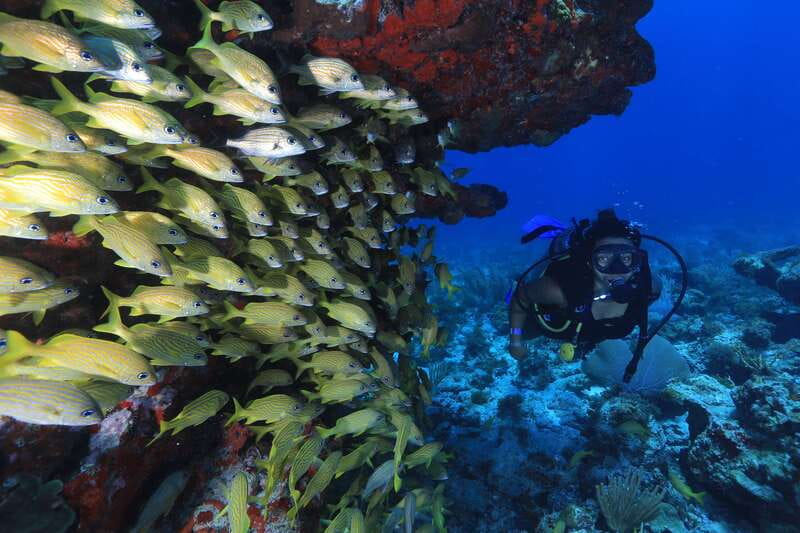
You’ll meet at Sotavento hotel. When you arrive, ask for the scuba program and look for the team by the pool area. The hotel is described as behind Calypso hotel, which helps if you’re using a map app.
This matters because the day starts early. Check-in is 8:00 AM, so you don’t want to waste time hunting once you’re there.
The tour is limited to a small group of up to 8 participants. That size is part of the appeal if you dislike long lines, crowded boats, or feeling like you’re just a number.
Who this program suits, and who should skip it
This is for people who can swim and can perform the basic scuba skills in the water. If you cannot do those tasks for safety reasons, you cannot participate in the underwater sessions and there is no refund for those safety-related situations, since the service is considered provided.
There are also clear medical and age limits. Children must be at least 10 years old and the maximum age listed is 65. It is not suitable for pregnant women and people with asthma, heart or brain problems, high blood pressure, lung lesions, organ transplant, diabetes, epilepsy, or any surgery less than 1 year.
If you’re unsure whether your situation fits the medical form, take it seriously and check with your doctor first. A scuba instructor can only go by what’s on that form.
On the flip side, if you’re healthy, can swim, and want your first real underwater experience without already having certification, this format is a practical way to start.
Safety, communication, and instructor style that puts first-timers at ease
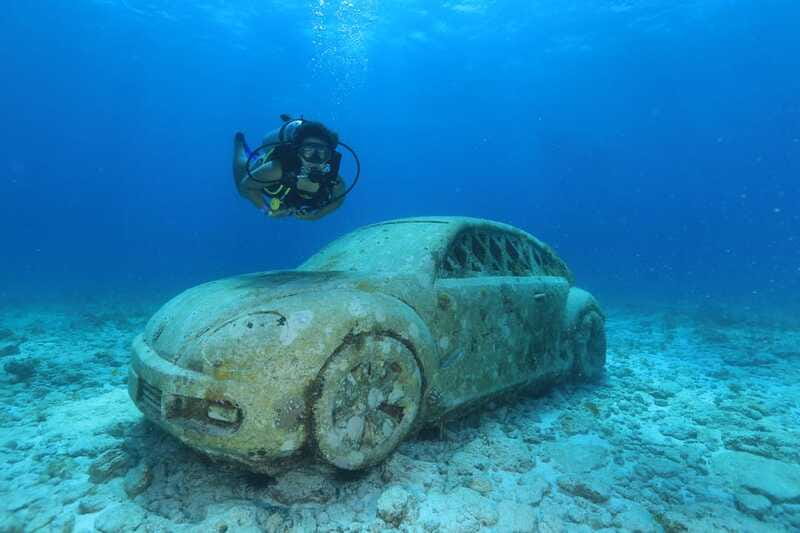
A big part of why this works for beginners is how the instructors coach. Many comments mention calm, patient teaching and a focus on safety signals, proper equipment use, and what to do during small problems.
Names that come up often include Marin, Lorena, and organizer Carolina. People describe Marin as staying calm in every situation and making sure partners stay safe. They also describe Lorena as patient and attentive, including quickly helping someone who felt panicky when starting underwater.
Communication is listed as English and Spanish, which is useful if you want clear instructions without guessing. Also, since the group is small, instructors can correct mistakes quickly in the pool before you head out.
You should also expect the instructors to keep you aware underwater. The feedback includes that guides stay close and check in regularly, which is exactly what you want your first time.
Timing and flight planning: the 18 to 24 hour rule
The schedule is straightforward: 8:00 AM check-in, 9:30 AM boat departure, and return to the dock by 1:00 PM. You’ll spend the day working through pool practice, theory, and the two ocean tank sessions.
For air travel planning, there’s an important rule. Plan to rest 18 to 24 hours after diving before getting on a plane. This is one of those logistics details that can ruin your day if you ignore it, so keep your flight timing flexible.
If your trip is tight, build in a cushion day. It’s one of the easiest ways to avoid stress, especially if you also have a hotel checkout to manage.
Photo and video options, and whether they’re worth it
Photos and videos are optional. If you’re on the fence, ask yourself one question: do you want proof for your future self that you really did this?
Many people say the optional photo and video package is worth it, with some mentioning around $80 for the package. There are also comments about extra footage and GoPro-style capture, with one person mentioning about $60.
The advantage is simple. Your hands are busy learning scuba basics, so having someone else frame the moment can turn a good day into a great memory.
If you are working on your first underwater comfort level, it can also reduce distractions. You can focus on breathing and buoyancy while the guide captures the best angles.
Should you book this Cancun beginner scuba program?
Book this if you want a structured start with two major underwater stops, MUSA and Manchones, plus a pool lesson that teaches you how to handle the basics safely. It’s a strong fit if you’re traveling solo, as a couple, or as a small group that wants personal attention and doesn’t want to spend weeks pursuing certification paperwork.
Skip it or double-check fit if you cannot swim, cannot complete the required water skills, or if you fall into any of the medical categories listed on the form. Also skip it if your schedule leaves no room for the 18 to 24 hour rest period after your underwater sessions.
Finally, go in with the right mindset. Your goal is not to perform like a pro. Your goal is to relax, learn fast, and enjoy the underwater world with a guide who keeps you safe and supported.
FAQ
Do I need a scuba certification to do this?
No. This program is designed so you can scuba with no certification, starting with theory and pool practice before the ocean tank sessions.
What underwater locations are included?
You’ll do two tank sessions, with the first at the MUSA Underwater Museum and the second at Manchones reef.
What is the schedule for the day?
Check-in is at 8:00 AM, boat departure is 9:30 AM, and you return to the dock around 1:00 PM.
Is transportation from my hotel included?
No. Transportation from your hotel is not included. You meet at Sotavento hotel and should find the team by the pool area.
What scuba gear and clothing are provided?
Full SCUBA equipment is included, including BCD, regulator, mask, and fins. A wetsuit is also included.
Is there an extra fee for the MUSA museum?
Yes. The entrance fee is not included and is listed as 500 Mexican Pesos per person.
What should I bring, and what is not allowed?
Bring swimwear, a towel, comfortable clothes, and your passport or ID card. Sunscreen is not allowed.
Can children participate?
Children must be at least 10 years old and the maximum age is 65 for this activity.
Are there health or safety restrictions?
Yes. A medical form is required, and the activity states it is not allowed for people with certain conditions, including asthma, heart or brain problems, high blood pressure, respiratory issues, epilepsy, and recent surgeries (less than 1 year). You also must be able to swim and complete required skills in the water.
Other Dives on the Wall
More Tour Reviews in Cancun

Cancun, Same Coast, Different Day



Just reviewed around Cancun



Cancun Tours, compared.
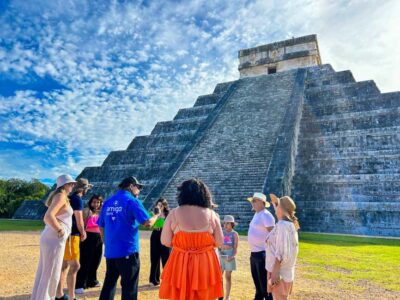 ★ 4.6Chichen Itza, Cenote & Valladolid Tour with LunchFrom $496,722 reviews
 ★ 4.5Cancun Best ATV Tour, Ziplines and Cenote Swim with LunchFrom $483,406 reviews
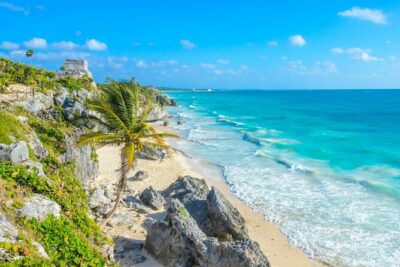 ★ 4.5Tulum Ruins and Cenote Guided Tour, from CancunFrom $492,592 reviews
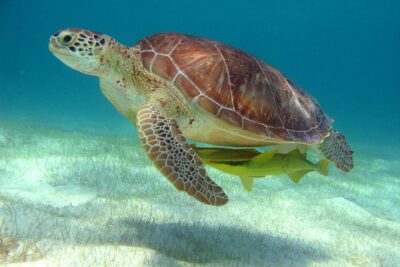 ★ 5.0Half-Day Sea Turtle and Cenote Snorkeling Tour from Cancun & Riviera MayaFrom $992,039 reviews
 ★ 5.0Adults only Hip Hop Sessions Boat Party CancunFrom $1051,797 reviews
 ★ 4.5Reef Snorkeling in National Park from Cancun with Beachside LunchFrom $441,781 reviews
 ★ 5.0Horseback Riding and Cenote Swim from Cancun or Playa del CarmenFrom $1201,780 reviews
 ★ 4.55-in-1 Cancun Snorkeling: Turtles, Reef, Musa, Shipwreck, CenoteFrom $791,678 reviews
Also on these lists